


Recognition
Diploma of Neža Rejc among finalists for the New European Bauhaus Award in the Rising Stars category: Reclaiming Spaces of Exclusion

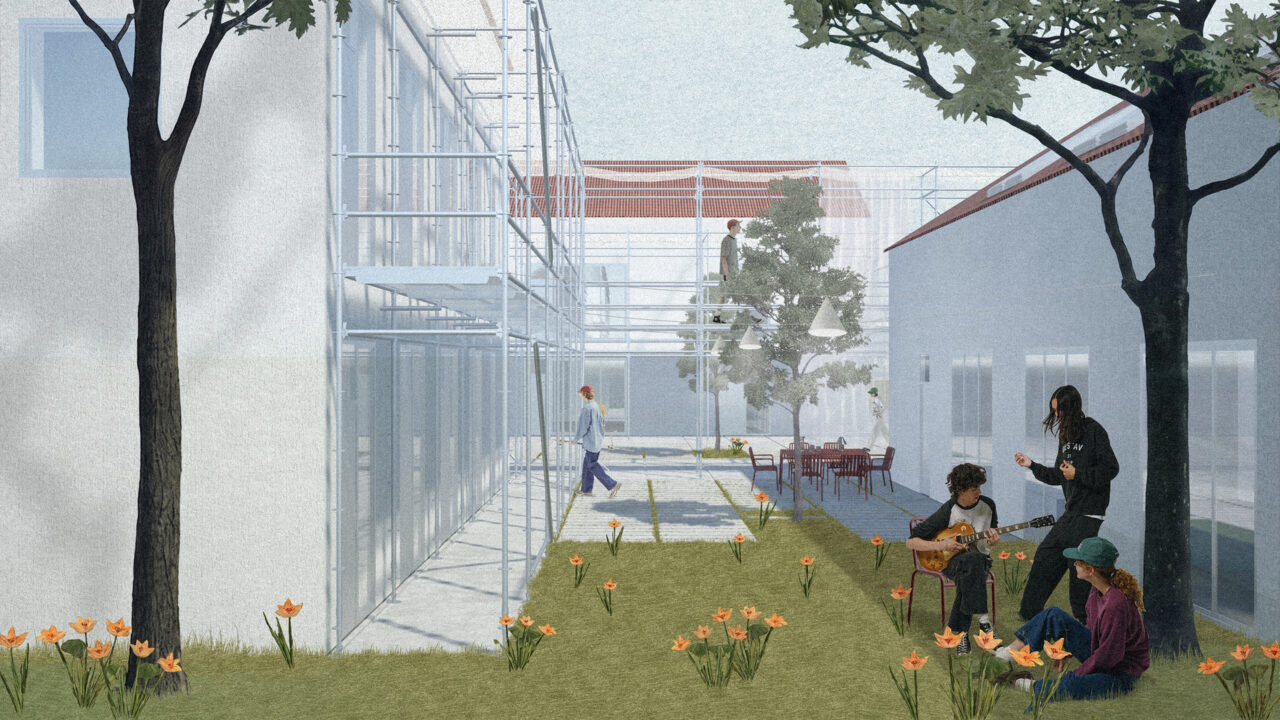
Graduate Neža Rejc applied for the New European Bauhaus Award with her diploma and was among the two finalists in the Rising Stars category.
PROJECT DESCRIPTION
The master’s thesis addresses the problem of institutional care for children and adolescents with emotional and behavioral disorders. Through the renovation of the SC Logatec (Residental and counseling institution Logatec), the project explores how care spaces affect the community and its understanding of the support infrastructure and those members who urgently need it.
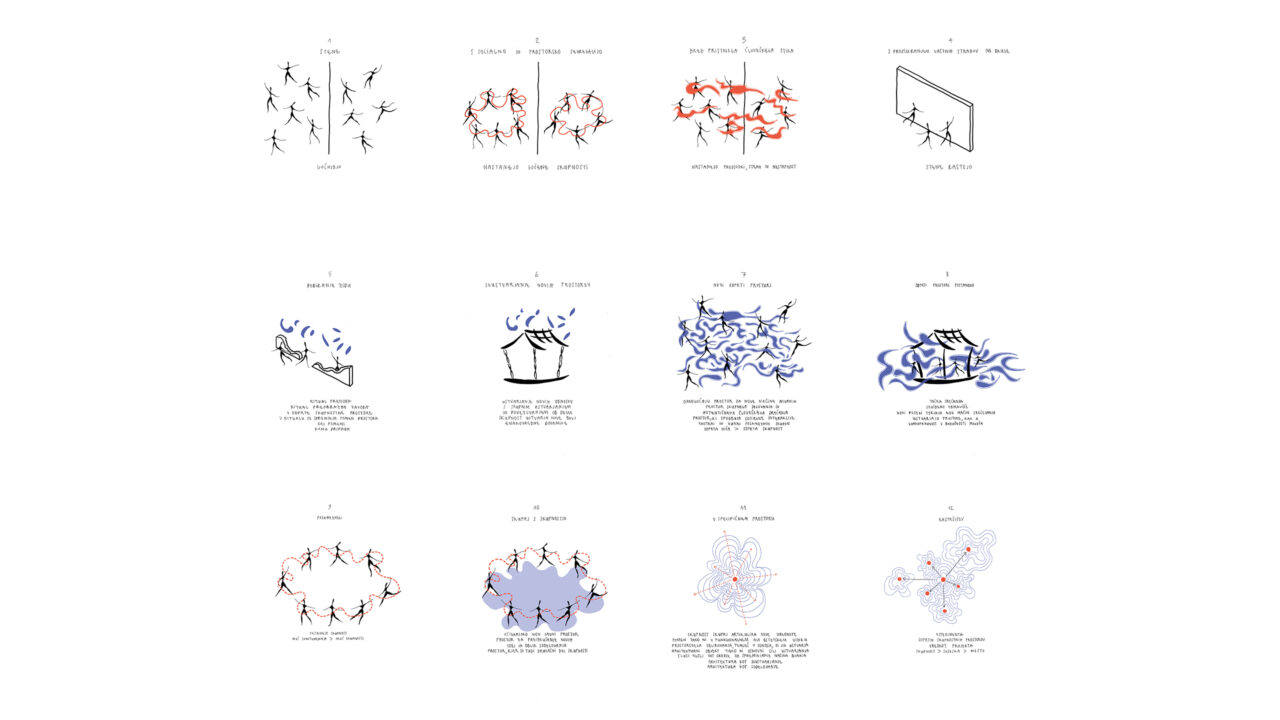
The task arises from the question of whether architecture and spatial interventions can change the dynamics and relationships in an environment marked by stigma and prejudice. It highlights the reflection that space is not only a reflection of society, but one of the factors that co-creates it.
Space of Exclusion
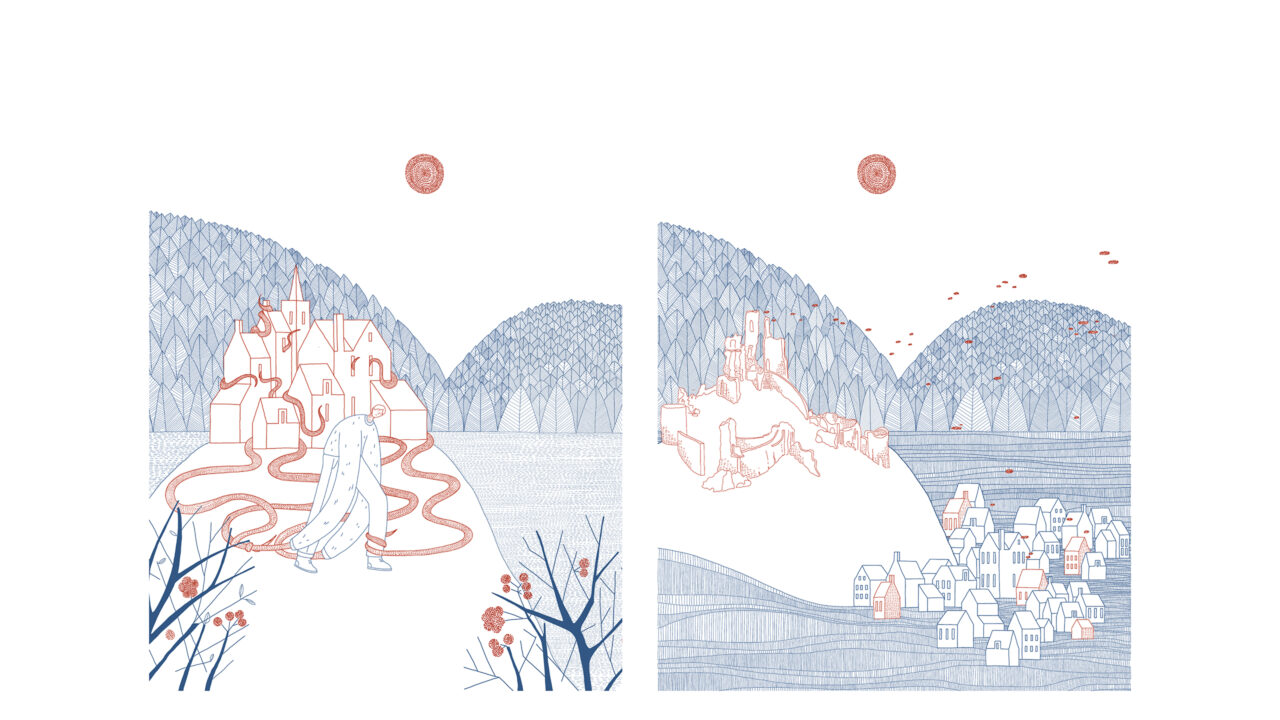
Institutions used to be (and often still are) the easiest answer to many human predicaments. Those who in any way stood out from the normal, the desirable, and the ordinary, as well as those who needed just a little more help, ended up (often for most of their lives) in a notorious, out-of-town institution, a space that throughout history became a dumping ground for ‘unproductive’, ‘help-seeking’, ‘dangerous’, and ‘different’ individuals.
The shift of care to remote institutions has changed the understanding of assistance and support systems and the dynamics of the relationship towards certain socially vulnerable groups. With a lack of contact, society often perceives them as not completely normal and thus labels its most vulnerable members as inhuman. Placement in an institution is thus not just a (temporary) departure, but the establishment of a new social identity, marked by exclusion and limited life opportunities.
Architecture of possibilities
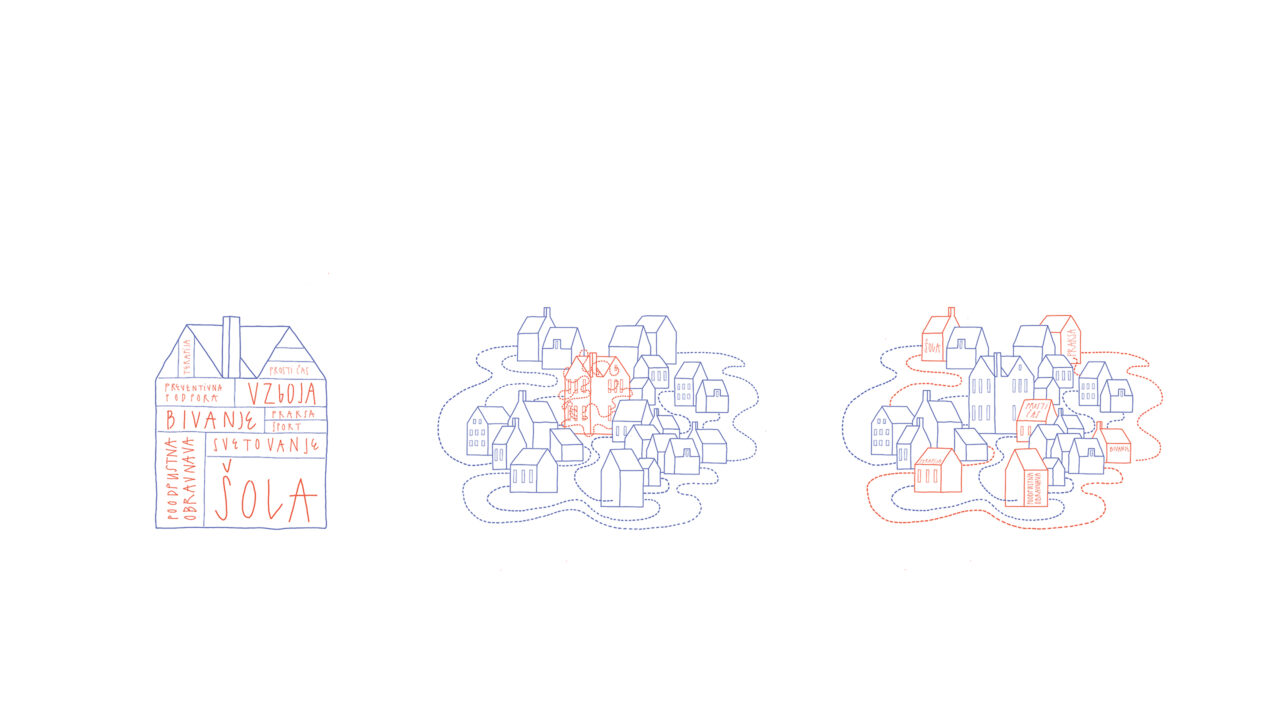
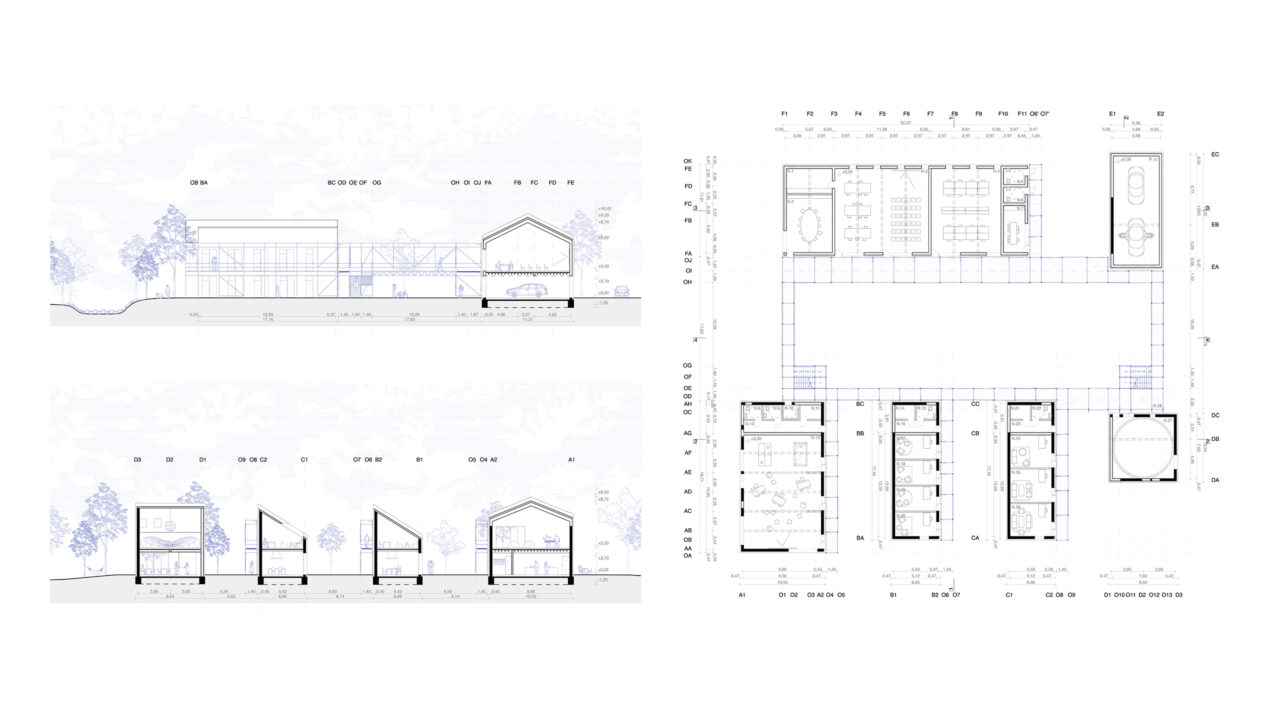
The project therefore does not treat the renovation of the SC Logatec as a mere architectural task, but as an intervention in the existing relationship between the institution and the community. It transforms the closed institution into an open network of housing units, community programs, and public spaces that create conditions for the daily encounter of different users.
The design of architecture does not arise only from an aesthetic or functional perspective, but from the relationships it creates. An architectural object is not just a form, but above all a process of community creation, architecture without a final image, which is constantly transformed by the active presence of its users/creators.