Report

House of Creatures in Milan: an echo of Slovenian design

21. – 26. apr 2026

Alcova | Milano

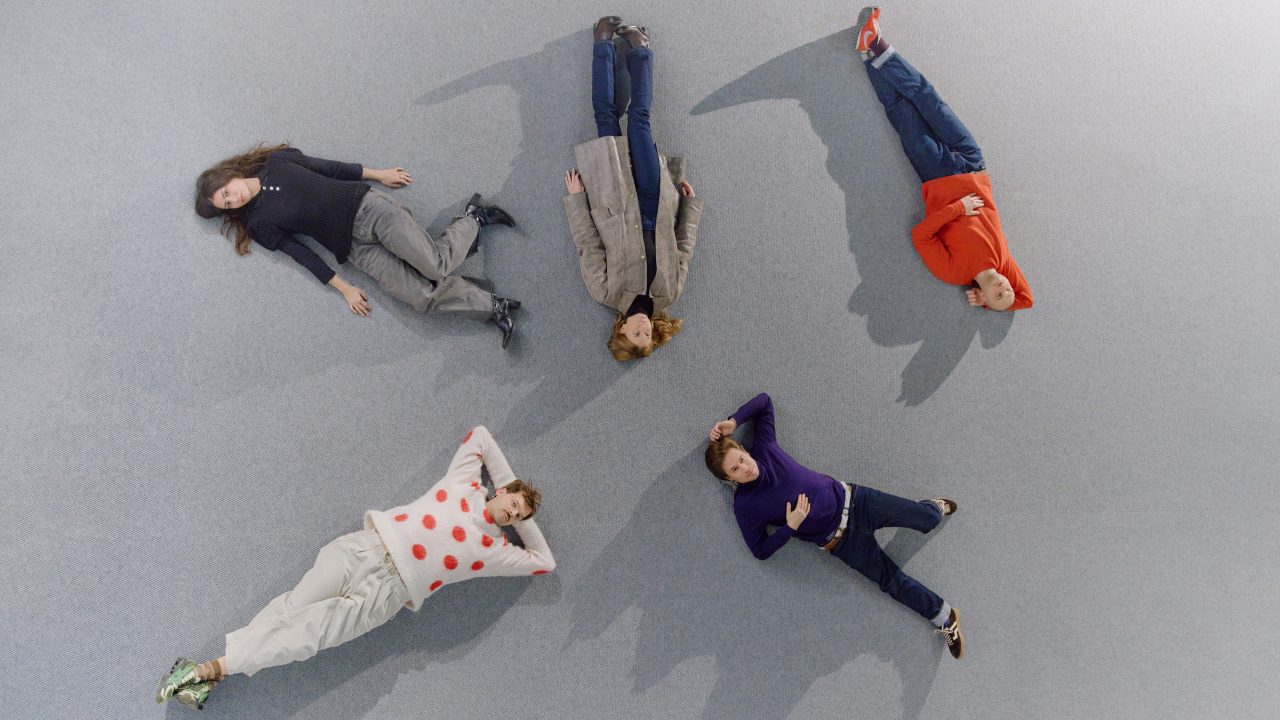
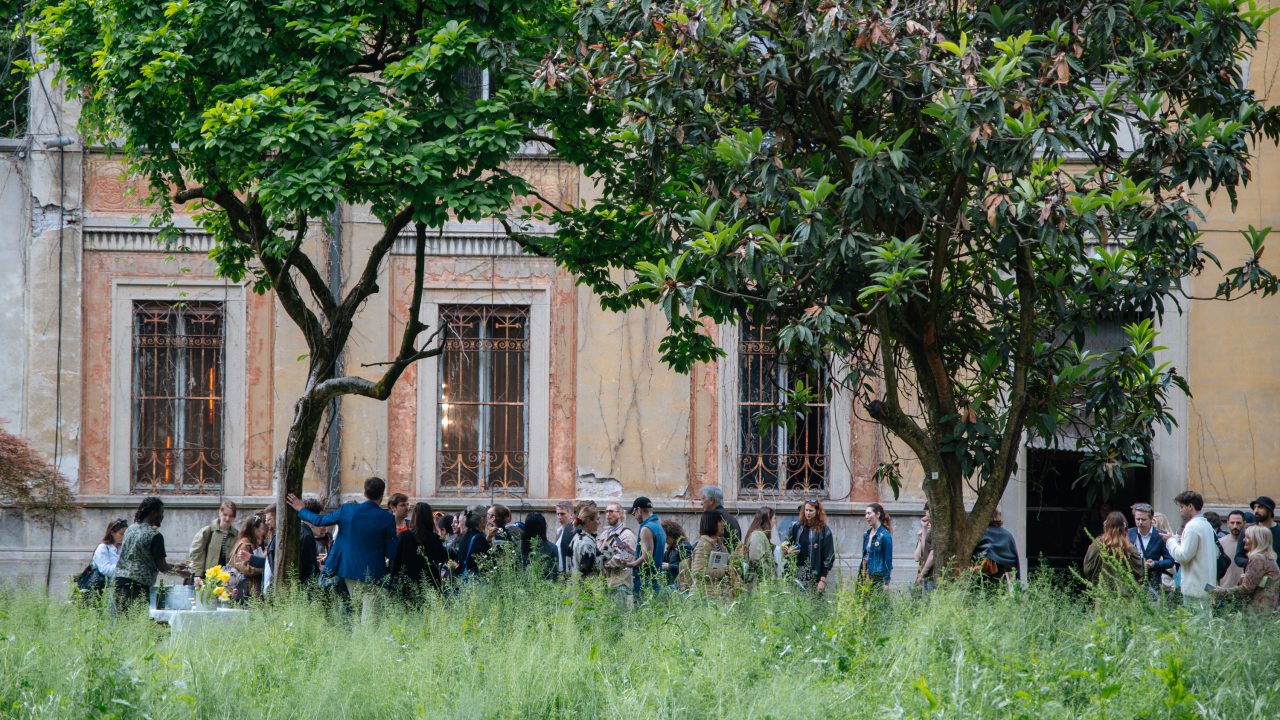
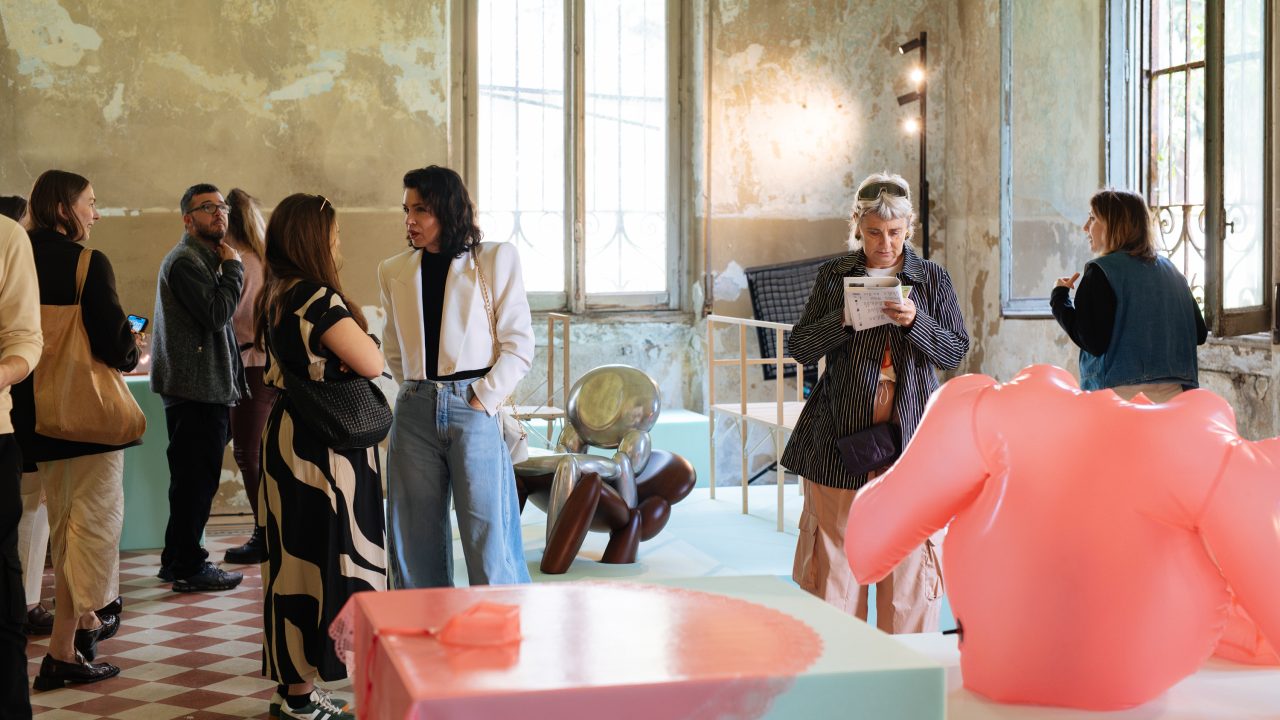
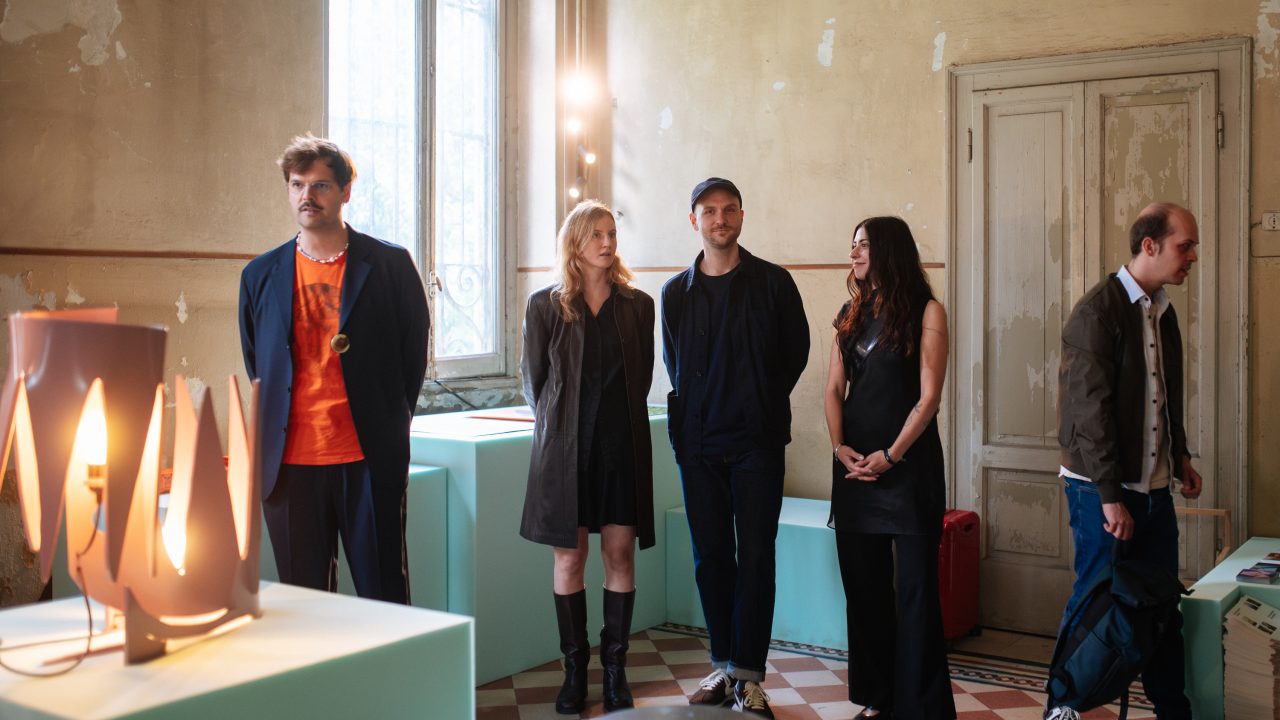
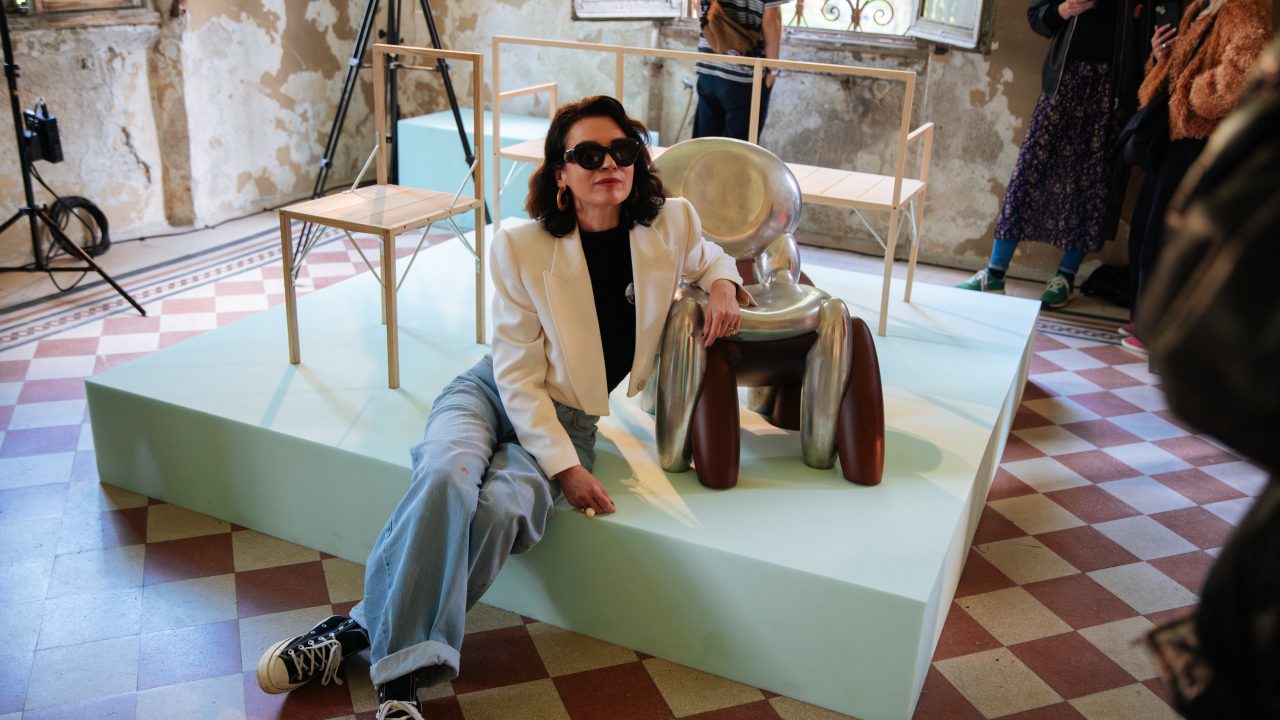
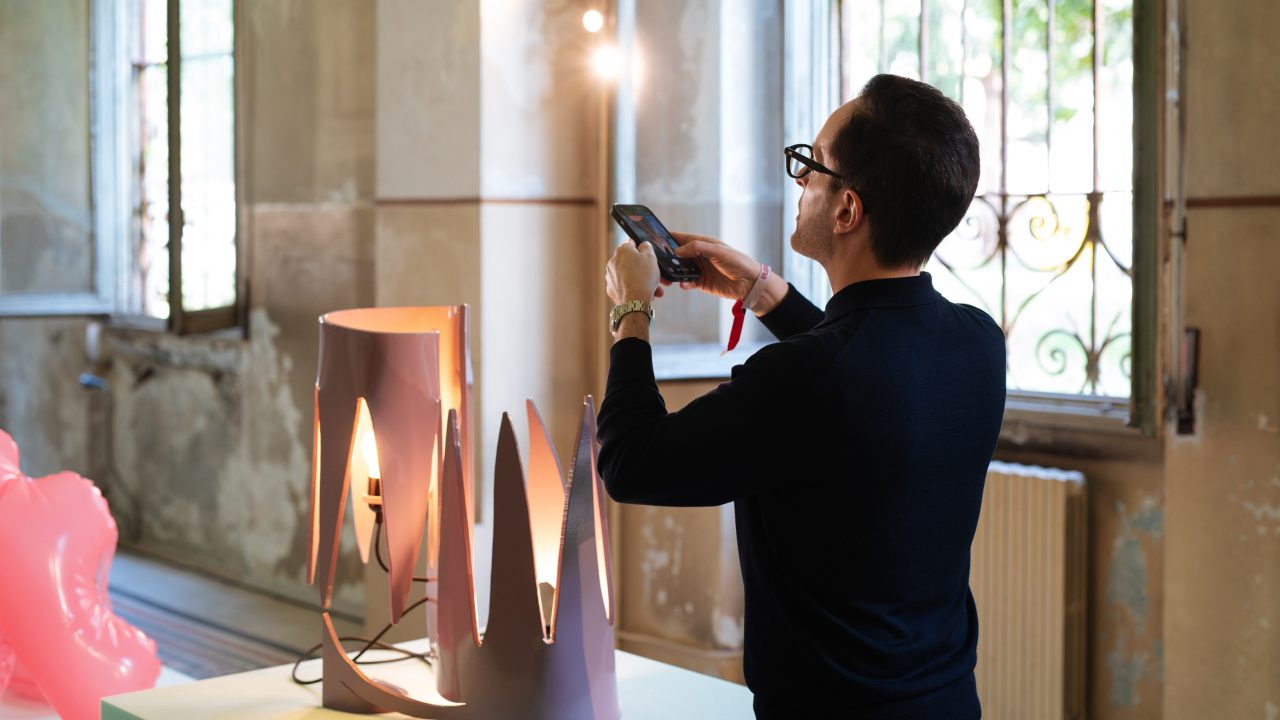
At this year’s Milan Design Week, the Center for Creativity  presented the exhibition House of Creatures, which placed Slovenian design in one of the key international contexts of contemporary design practices.


The project, curated by the international interdisciplinary group Ryan Barriball, Sera Eravci, Urša Gantar, Tine Tribušon, Gašper Uršič and Vid Žnidaršič, has attracted strong attendance and attracted significant interest from the international professional and wider public. The exhibition featured Lara Bohinc, Juicy Marbles, Soft Baroque, Dan Adlešič, Sari Valenci, Maruša Sagadin, Lucija Rosc, Nejc Prah, Janez Suhadolc and Toasted Furniture, who work at the intersection of product design, fashion, visual communications and food development.


The exhibition was included in the program of the Alcova platform, which is considered one of the most prominent venues for contemporary, experimental design and brings together leading designers, curators, institutions and media every year.


International exposure


House of Creatures has been included in reviews and selections of the most interesting presentations of Milan Design Week in leading international media, including The New York Times, CNN Style, Dezeen, Wallpaper and Monocle, as well as in specialized publications such as Designboom, Disegno and Design Anthology. Such media presence confirms the relevance of the project in the international space and significantly contributes to the greater visibility of Slovenian creators and their work.


A project that lasts


The project does not stop with the end of the exhibition. The House of Creatures website has been established, which acts as a permanent platform for the project, providing access to the presented works, the authors and the curatorial concept. Selected visual materials and expanded media materials documenting the exhibition and its context are also available.


The Role of the Center for Creativity


With the House of Creatures project, the Center for Creativity continues its role as a key national platform for the support, production and internationalization of the cultural and creative sector. The presentation at Milan Design Week strengthens the visibility of Slovenian design and opens up new opportunities for international cooperation and further development of creative practices.


The project was created as part of the Presentation of Contemporary Slovenian Design at Milan Design Week 2026, organized by the National Platform – Center for Creativity / Museum of Architecture and Design. The project is co-financed by the European Union and the Republic of Slovenia.

Presentation

House of Creatures: Curatorial team at Milan Design Week 2026
20. – 26. apr 2026

Alcova | Milano

The project House of Creatures by the team of Ryan Barriball, Sera Eravci, Urša Gantar, Valentin Tribušon, Gašper Uršič and Vid Žnidaršič was selected through the open call issued by the Centre for Creativity for a curatorial proposal for presentation at Milan Design Week 2026.


The project, submitted by a group of experienced and internationally connected authors, convinced the expert jury with its outstanding concept, recognisability and boldness. The proposal stands out for its original modular exhibition design and sustainable approach.


Curatorial Statement – House of Creatures


What happens to the objects that surround us when we look away?
Do they stretch, misbehave, or whisper to each other?
Do they wait for us to use them, or do they move in rhythms of their own?


House of Creatures brings together the works of ten contemporary Slovenian design practices and imagines them not as products, but as beings. These creatures defy fixed definitions and refuse to be confined to conventional categories of use, discipline, or typology. What matters is not what they are for, but how they exist.


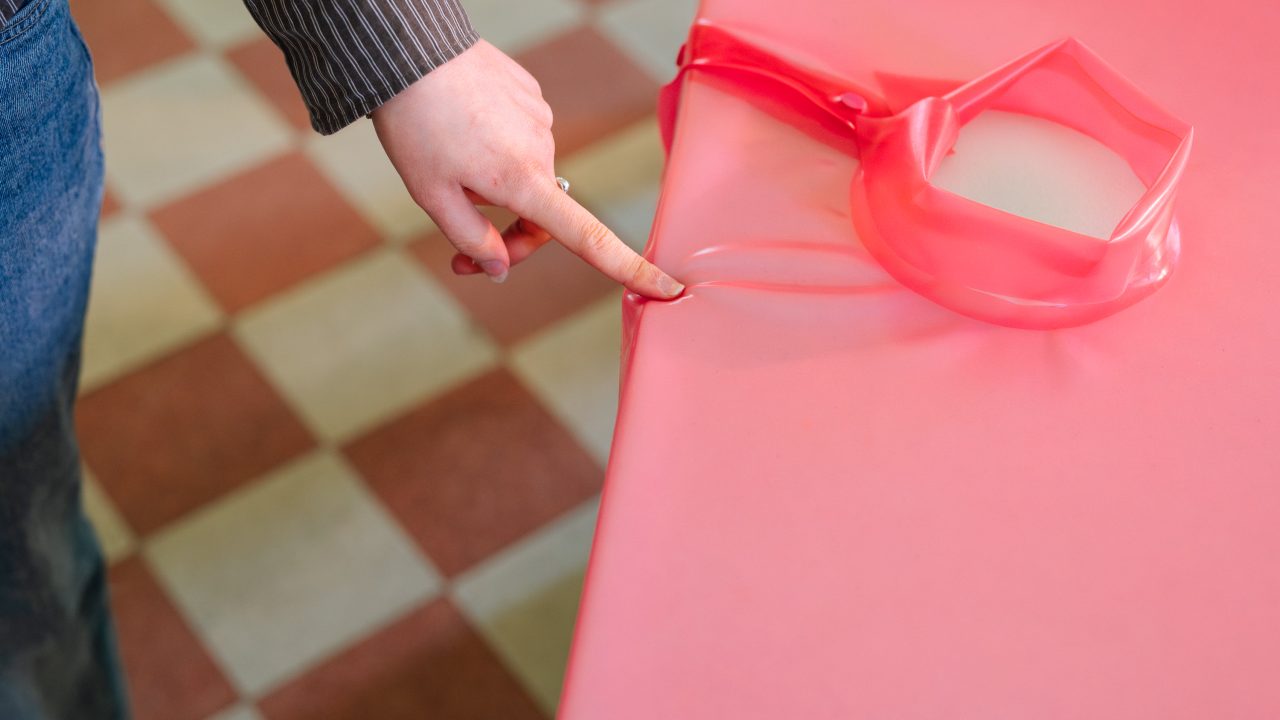
By stretching, bending, and undoing established notions of form and function, each creature unsettles our expectations of use, scale, and identity. They sway, sag, leak, grow, disrupt, and spill beyond their intended spaces. Together, they rethink design as a practice of establishing relations between objects, spaces, bodies, and imaginations.


This is a shared home for them: an intimate habitat where creatures position themselves in relation to one another. Here, they observe, respond, and adapt to one another, forming interactions that bring their home to life. In this home, the creatures are not used, but rather lived alongside. As such, the exhibition does not replicate human modes of living or control. A chair does not sleep. A lamp does not seek comfort. Instead, the space allows creatures to exist on their own terms.


The creatures inhabiting this home emerge from practices by Soft Baroque, Lara Bohinc, Dan Adlešič, and Juicy Marbles, among others. The exhibition seeks to stretch the boundaries of design, bringing together fashion, product design, food development, and other creative practices that treat design as thinking, making, and relating across disciplines, challenging fixed definitions of objects and their use.


Visitors encounter the creatures not as spectators, but as temporary inhabitants moving through a space already occupied. Meaning emerges not through instruction, but through encounter; and the identity of each creature is inseparable from how it is met, lived with, and remembered.


House of Creatures is curated by an international, multidisciplinary team comprising Ryan Barriball, Sera Eravci, Urša Gantar, Valentin Tribušon, Gašper Uršič, and Vid Žnidaršič, who work across research, architecture, graphic design, critical writing and curatorial practice.


Photo: Klemen Ilovar, Ryan Barriball


More about the open call


The exhibition is produced by the Centre for Creativity, which, in collaboration with the selected curatorial group, is developing the final concept of the presentation. Through the open call for the selection of the curatorial group, the Centre encourages the articulation of the field of design curation and creates an opportunity for the development of experimental approaches. The project is part of the internationalisation programmes of the Centre for Creativity.

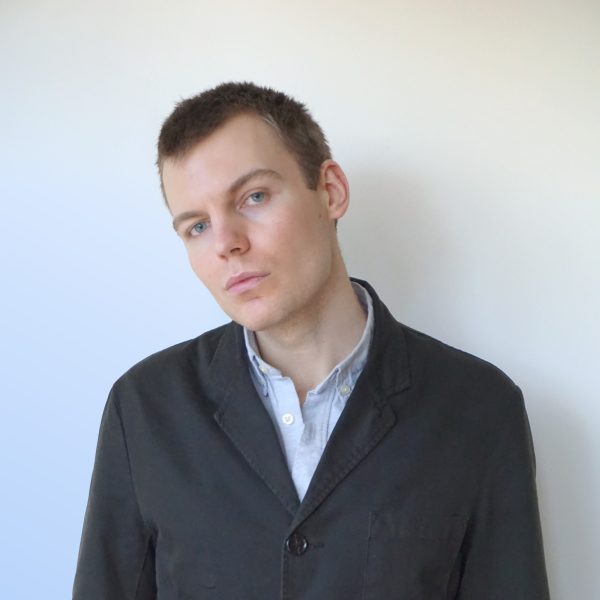
Ryan Barriball

Ryan Barriball, BA (Hons) MArch Cantab, graduated from the University of Cambridge in 2024. He works at Of Architecture on projects across the UK and South Korea. He previously worked at Christ & Gantenbein in Basel and MVRDV in Rotterdam. Ryan was part of a group nominated for the 24’ Piranesi Honourable Mention Award for the project If Columns Could Talk, which was undertaken at the AA Nanotourism Visiting School. In 2023, he participated in the Porto Academy workshop in Mendrisio with Lütjens Padmanabhan. In 2021, he was a guest critic at the University of Plymouth. Ryan’s work deals with issues of perception and architecture. He explores the experiential possibilities of the architectural object, particularly the way architecture can bring awareness to our bodily presence in real life. Prior to studying architecture, he worked as a groundworker, using heavy machinery and hand tools to transform land.

Sera Eravci

Sera Eravci is a freelance writer and curator working across cultural institutions, galleries, and archives between London and Berlin. Her writing and research practice moves between critical theory, reflective and experimental approaches, and short-form explorations of everyday life. Her work traces overlooked histories, diasporic experiences, and the social contexts through which art, design, and culture are produced and encountered. She has contributed to various curatorial projects and exhibitions, including work with Rath Gallery and Gallery FUMI, and has several years of experience in project management and communications across the arts and culture sector, including in public relations at Bjarke Ingels Group. She is currently undertaking curatorial and critical theory studies at Central Saint Martins in London, and contributes to The Cosmic House, where she supports visitor engagement and assists with archival preservation.

Urša Gantar

Urša Gantar, m.i.a., is an architect from Ljubljana working on a wide range of design-driven projects, with an interest in residential and cultural spaces, as well as interdisciplinary, research-driven approaches. After completing her studies at the University of Ljubljana’s Faculty of Architecture, she began her professional career in Vienna, where she worked on a variety of projects, including the Austrian Pavilion at the Venice Biennale. She later gained valuable experience at Počivašek Petranovič Architects in Ljubljana, primarily working on private and public residential projects of various scales and contributing to several competition-winning proposals. For the past several years, she has lived in Basel, Switzerland, where she most recently worked as an architect at the international firm Christ & Gantenbein, contributing to projects in Zurich and London, while continuing to pursue her broader architectural interests.

Valentin Tribušon

Valentin Tribušon, m.i.a., is an architect from Ljubljana whose work encompasses cultural, residential, urban, and small-scale projects. His background ranges from stage design to architectural practice, with a strong emphasis on conceptual clarity. Since 2018, he has been part of Bevk Perović Arhitekti, leading projects that have gained wider recognition, including the Rehabilitation Centre for the Blind and Visually Impaired, recipient of the Plečnik Award, as well as several successful competition entries, most notably the refurbishment of the SNG Drama Theatre. He also engages in architectural education as a guest critic at the Faculty of Architecture, University of Ljubljana.

Gašper Uršič

Gašper Uršič is an interdisciplinary designer from Ljubljana who is currently working as a digital product designer at the international technology company Endress+Hauser in Basel. He is a co-founder of Studio Kruh, a Ljubljana-based studio for meaningful design solutions, where he was active between 2016 and 2023. His work has received numerous national and international awards, including four Brumen Awards, the AICA Zgraf Award 2025, and a Special Mention at the Kantar Information is Beautiful Awards. His typeface, “Brick”, was selected as one of the 50 best European student type design projects in the Pangramme: Learning Type Design competition. His work has been exhibited internationally, including at exhibitions in Slovenia, Germany, France, Canada, Croatia, Switzerland, and beyond. He is currently a board member of the Brumen Foundation and serves as a jury member for the student category of the TamTam Plaktivat Sveža kri poster competition.

Vid Žnidaršič

Vid Žnidaršič, m.i.a., MA (Dist.), ARB, is an architect, researcher, and architectural historian. He teaches as a Design Fellow at the University of Cambridge, serves as Studio Master on the Intermediate Programme at the Architectural Association in London, and is Programme Head of the AA Nanotourism Visiting School. He worked as a Senior Architect at BIG – Bjarke Ingels Group in London for over five years, leading the design and construction of various projects in the UK and abroad. Prior to this, he worked at several internationally renowned architectural offices, including Bevk Perović in Ljubljana and Casper Muller Kneer and Farshid Moussavi Architecture in London. In addition to his ongoing critical spatial practice, he is currently pursuing a PhD in Architectural History and Theory at the Bartlett School of Architecture, UCL, where he is constructing a non-aligned history of the Non-Aligned Movement summits as part of his research.

BIO 29

The 29th Biennial of Design – BIO 29: Open Call for Designers

19. nov 2026 - 4. apr 2027

Applications are open until 26 February 2026

The Museum of Architecture and Design (MAO), is launching an international open call for designers within the BIO 29 Production Platform, in collaboration with the Centre for Creativity (CzK).


BIO 29 will take place from 19 November 2026 to 4 April 2027. Under the title Soft Fields, the biennial explores how knowledge embedded in research, industrial, and infrastructural environments can be opened, redirected, and redistributed through design practice. The upcoming biennial is curated by Martina Muzi, in collaboration with assistant research curator Ro Pérez Gayo.


The BIO Production Platform

The Production Platform supports new design-research projects developed in Slovenia in collaboration with local expertise, institutional partners, industry actors, and communities. It offers a flexible structure for collaboration, site visits, and knowledge exchange, emphasising situated experimentation and collective learning.


We invite local and regional designers and interdisciplinary practitioners, working individually or collectively, to apply.


Applications are open until 26 February 2026.


Partners

The Museum of Architecture and Design (MAO) in Ljubljana is pleased to announce Martina Muzi as the curator of the 29th Biennial of Design (BIO 29). Organised by MAO in collaboration with the Centre for Creativity (CzK), the biennial will open in November 2026 and run through to April 2027, continuing BIO’s longstanding exploration of design’s role in contemporary society.


Titled Soft Fields, BIO 29 examines how knowledge enclosed within research and industrial environments can be opened, redirected, and redistributed through design practice. Soft Fields extends its conceptual framework by examining how these circulations shape our environments and institutions, and how their obstructions, asymmetries and openings become sites of intervention. It approaches design not as a solutionist gesture but as a situated practice capable of engaging with these frictions and redistributions.


Transfer of knowledge is never only mechanical—it is relational. Each handoff carries responsibility, tacit knowledge, and a redistribution of control. As knowledge transfer becomes increasingly organised around data capture and compliance, and as decision-making shifts from human judgment to software systems, Soft Fields asks: What becomes formalised, and what resists metrics? Which forms of intelligence remain undervalued? How might design sustain the informal, the situated, the hard-to-classify?


BIO 29 frames the exhibition as a working ground, at once part research platform and part production site. It envisions a process of creating temporary openings for designers to enter institutional agendas and engage their practices with real world contexts. Grounded in embedded research within laboratories, institutions, factories and researchers across Slovenia and their global chains, the biennial investigates how technical infrastructures and institutional habits regulate access to knowledge—and how design might reroute, reframe or reopen these flows. With an approach where soft is a mode for moving across disciplines, technologies, bodies and places, the biennial unfolds as a network of entry points, where asymmetrical voices and agents evolving at different paces, and overlooked systems of production use design to transmit, translate and transform.


Martina Muzi is a designer, curator and educator who engages critically with design’s material logistics, geopolitical cultures, and social formations – from family to factory, atelier to school. She leads the Studio Technogeographies BA programme at Design Academy Eindhoven, where she also curated the GEO-DESIGN exhibition platform. She is currently curator a FABER of the Design Signals, a program investigating the relation between local industries and design practices. Her collaborative work has been presented at the Venice Architecture Biennale, Vitra Design Museum, Istanbul Biennial, MAAT Museum, and M+ Museum of Visual Culture, among others. Known for a curatorial practice that creates the conditions for design to build relationships across disciplines, she approaches exhibition-making not as a site of display, but as a temporary infrastructure for exchange, translation and circulation – activating across exhibition, fieldwork, pedagogy, and public programme.


“We’re delighted to welcome Martina Muzi as BIO’s new curator. With her deep experience in international projects rooted in local urgencies, we’re excited to collaborate closely with her on shaping a biennial that is ambitious, collaborative, and truly meaningful,” says Maja Vardjan, Director of MAO.


“This year’s design biennial will enable the exceptional knowledge developed behind closed doors, hidden from public view, to become visible, tangible, readable, recognisable, and usable. We will use it on the biennial’s shared platform, with the intention that the collaborations formed through this process will outlast the biennial,” notes Maša Ogrin, the Head of BIO.


About BIO

Founded in 1963, the Biennial of Design (BIO) is one of the world’s longest-running design biennials. Over time, it has evolved from a showcase of industrial design into a platform for research-driven and socially-engaged practices. Today, BIO functions as a testing ground where design operates across disciplines, engaging with systems, modes of production, services, and scientific research. BIO is organised by the Museum of Architecture and Design (MAO) in cooperation with the Centre for Creativity (CzK).


Further details about the curatorial framework and the Open Call for BIO 29 will be announced in the first week of February 2026.


Follow BIO29: @bio_ljubljana

Photo: Klemen Ilovar, MAO

Partners

Center for Creativity / MAO launched the public call for the Made in Slovenia 2025 Mark of Excellence in May 2025. By the submission deadline of 3 September 2025, a total of 211 applications from 137 different applicants had been received.


The seven-member expert jury, consisting of Tanja Devetak (Faculty of Design), Peter Ličen (Lushna Glamping), Martina Malešič (MAO), Vasa J. Perović (Faculty of Architecture), Matevž Popič (designer), Nikola Radeljković (Numen / For use), and Ajda Schmidt (designer), reviewed the applications and unanimously selected 31 products scoring 60 points or more, which are awarded the Made in Slovenia 2025 Mark of Excellence, in accordance with the call’s criteria.


The jury awarded the Mark of Excellence to 31 selected products by Slovenian designers, organizations, and companies that met the criteria of the public call — products that are design-quality, conceptually coherent, and functionally innovative. Many of the selected products address specific local issues while remaining globally relevant. The jury highlights a group of products that explore process and systemic approaches, where experimentation and innovation in technological and design processes solve broader challenges.


The jury also commends the principle of small-batch production, adapted to user needs and demands, which is seen as a key factor in developing a sustainable economy in a world of overproduction. Many products also address the ongoing theme of connecting contemporary design with rich craft heritage, promoting sustainable and local production. The overall selection provides a cross-section of submitted design work, reflecting new roles of design in today’s challenging environmental, social, and economic conditions. The jury welcomes the large number of submissions demonstrating innovation and experimentation in process-oriented design. The continuation of this call is recognized as encouraging innovation and experimentation in the design field.


Due to the high level of interest, the selection for the mark of excellence will continue in future years.


The selected products will soon be published on the Made in Slovenia website.


On behalf of the expert jury and the Center for Creativity team, we sincerely congratulate the recipients of the 2025 Mark of Excellence!

Herbarij, kolekcija nakita

Martina Obid Mlakar

Potiskan baletni dres/bodi/kopalke

Uroš Belantič; 1975, umetniško ustvarjenje, d. o. o.

Vozlani obešalnik

Urška Sadar; urskas, Urška Sadar, s. p.

Vrtovi spregledane moči

Kolektiv Oloop; Zavod Oloop

Dodola

Društvo Pjorkkala; Kulturno oblikovalsko in umetniško društvo Pjorkkala

HEX cor - polifonični sintetizator

Zavod Hex Haus

Broken Bones

Boštjan Marušič; Broken Bones, d. o .o.

Wood‘n’Roll - kolebnica

Metod Burgar; Metod Burgar – samozaposlen v kulturi, oblikovalec

Odeja Peča

Ksenija Baraga; Baragaga, d. o .o.

Stol C2210

Boštjan Gabrijelčič; Arhitektura, d. o. o.

Alpinistični nahrbtnik izdelan po naročilu

Neža Peterca; Neža Peterca, s. p.

Vaze iz naravnih in recikliranih glin

Rok Oblak; Rok Oblak – oblikovanje

Naravna slamica

Barbara Leber Vračko

Hlače z velikima gubama

Petja Zorec, s. p.

Modularni sistem lesenih montažnih hiš Fresh

Marles hiše Maribor, d. o . o.

D’Qualia – Zgodbe, ki jih lahko okusiš

Eva Klinc Purič; Rms, d. o. o.

Mala kuhalnica

Maja Kotar

Hydra 530

Roto, d. o. o.

Svečniki

Nikolaj Salaj

Kolesarski sedež Lupina Monocoque Open

Ana Vehovar; Berk Vehovar kompoziti d. o. o.

Oblačilo z življenjem

Urška in Tomaž Draž; Draž, d. o. o.

Predmet - izdelki iz konopljinega betona

Lenart Piano; Pilot projekt, d. o .o.

Lesene posode Swing

Iztok Lemajič; Idfl, d. o. o.

Kvadroplašč

Nataša Hrupić; Modno oblikovanje, Nataša Hrupić, s. p.

Počivalnik M

Matena Bassin; Visart – društvo za organizacijo, izvedbo in promocijo kulturnih projektov

Kuhinjska krpa Čebela

Jelisaveta Marković, Minea Sončan Mihajlović; Sitar, d. o. o.

Rokovnik Twenty Twenty six - Coffee

Nika Ferš; Nika Ferš, s. p.

3D Bristle Dynamics™ zobna ščetka

Jan Habat; Fresh 32, d. o .o.

Midva vidva onadva

Gregor Žakelj; visualbraingravity, d. o. o.

NT Systems električni pogoni in kontrolerji

Andrej Kregar; Kreatif oblikovanje, d. o. o.

Obešalnik Loop

Iztok Lemajič; Idfl, d. o. o.

About the catalogue

In 2024, the Centre for Creativity, based on initiatives from various partners, began curating a selection of products from Slovenian creators, designers, authors, organisations, and companies. The online catalogue of the selection of Slovenian gifts, under the unified brand MADE IN SLOVENIA, reflects the visual and design excellence, identity, and heritage of the Republic of Slovenia, as well as the national brands I Feel Slovenia and MADE IN SLOVENIA. The products featured in the catalogue were selected by a professional jury.
The selected products stand out for their design quality, exceptional craftsmanship, use of sustainable materials, and innovation, with the majority produced in Slovenia. Their functionality goes beyond mere decoration, embodying the values and characteristics of Slovenia and expressing the country’s identity. These products are of Slovenian origin and predominantly made by local creators. They emphasize innovation across various sectors, as well as being sustainable and of local origin. The high-quality, functional, and aesthetic gifts connect a contemporary creative approach with Slovenia’s rich heritage—cultural, historical, natural, economic, environmental, technological, gastronomic, and sports-related.
The selection of Slovenian gifts presents Slovenia as an ambassador of good design. It reflects the vision of a modern Slovenia and helps to increase Slovenia’s diplomatic, international and business visibility.


For whom

The catalogue provides public administration, institutions, companies or individuals with a premium selection of uniquely designed and original Slovenian gifts and souvenirs for various occasions and across different price ranges.


Made in Slovenia

The products featured in the online catalogue of selected Slovenian gifts are recipients of the Made in Slovenia mark of excellence. Recipients become part of the Made in Slovenia collection, which showcases best practices of Slovenian creators and companies in the creative sector. The collection will be recognized globally as exemplary Slovenian design, promoting sustainable principles and fostering collaboration between the creative and economic sectors.


Due to the strong response from partners and applicants, the Centre for Creativity will continue to expand the selection and issue public calls in the coming years. A key goal of the call is to strategically encourage high-quality selections and support the development of such production.


About the selection

In 2025, the Center for Creativity published the second public call for the selection of Slovenian gifts Made in Slovenia. A jury composed of Maja Bahar, National Museum of Slovenia; Barbara Hiršman, Protocol of the Republic of Slovenia; Barbara Jaki, National Gallery; Primož Jeza, ALUO; Katjuša Kranjc, Raketa; Maja Vardjan, MAO; Mina Žabnikar, Grupa Ee unanimously selected 50 products. After two open calls, 107 products are included in the catalogue in accordance with the call’s criteria.


The online catalogue is not a store and does not sell products. You send inquiries directly to the product’s author.

Open call

Educational and Mentoring Programme FASHION INCUBATOR

Application deadline: 16 January 2026

Slovenian fashion designers, apply for a four-month programme that opens the door to the international fashion world.

Work alongside established mentors and lecturers: Uroš Belantič, Lara Bohinc, Tjaša Bračko, Paola Brandi, Natasa Cagalj, Anžej Dežan, Marta Giralt Dunjó, Nina Dremelj, Anze Ermenc, Sanja Grcic, Lucija Kejžar, Aleš Pustovrh, Angela L. Rupprechter, Almedina Ramic, Melinda Rebrek, Rok Stritar, Tina Gorjanc Safhakter, and Andrea Varga.


𝗡𝗘𝗪 𝗞𝗡𝗢𝗪𝗟𝗘𝗗𝗚𝗘
Gain insights into industry trends and develop your business model, branding & storytelling, communication, leadership, sales strategies and networking skills.


𝗖𝗢𝗣𝗥𝗢𝗗𝗨𝗖𝗧𝗜𝗢𝗡 𝗙𝗨𝗡𝗗𝗦
All participants who successfully complete the programme receive €2,500 in coproduction support for creating a lookbook and presenting their work at LJFW.


𝗟𝗢𝗡𝗗𝗢𝗡
Top-performing participants will present their work at the London Fashion Week in the I.DEAPR showroom and receive three months of media representation.


One participant will also receive the Center Rog Annual Package for year-round access to selected services and workspaces.


𝗔𝗽𝗽𝗹𝗶𝗰𝗮𝘁𝗶𝗼𝗻 𝗱𝗲𝗮𝗱𝗹𝗶𝗻𝗲: 𝟭𝟲 𝗝𝗮𝗻𝘂𝗮𝗿𝘆 𝟮𝟬𝟮𝟲


Organiser: Centre for Creativity / MAO Slovenija
Partners: LJFW, ELLE Magazine, Center Rog Creative Hub

Partners

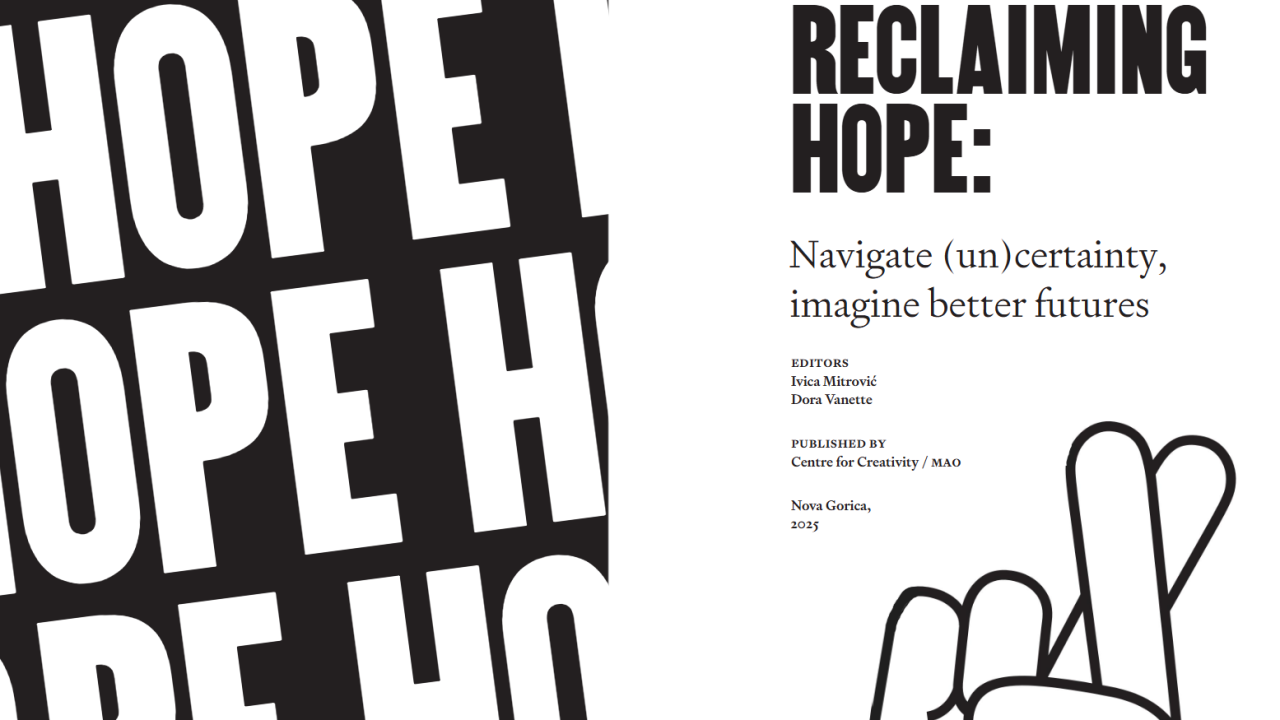
The book Reclaiming Hope: Navigate (un)certainty, imagine better futures, edited by Ivica Mitrović and Dora Vanette and published by the Centre for Creativity (Museum of Architecture and Design, Slovenia), brings together contributions from authors, researchers, and practitioners in the fields of design, architecture, art, and social sciences. It explores the role of imagination, solidarity, and collective action in shaping more just and sustainable futures.


Through essays and case studies, the book bridges theory and practice, offering reflections on speculative design, education, care infrastructures and participatory approaches. It highlights the power of collaboration, proximity, and care — values that were also central to the Reclaiming Hope symposium, from which the publication emerged.


Digital version of the book: PDF


Order your copy: MAO online store

(the book is free of charge; shipping costs apply only)

Report

The symposium RECLAIMING HOPE

18 – 19 Sep 2025 | Design + Science Summer School 20 – 22 Sep 2025

Nova Gorica

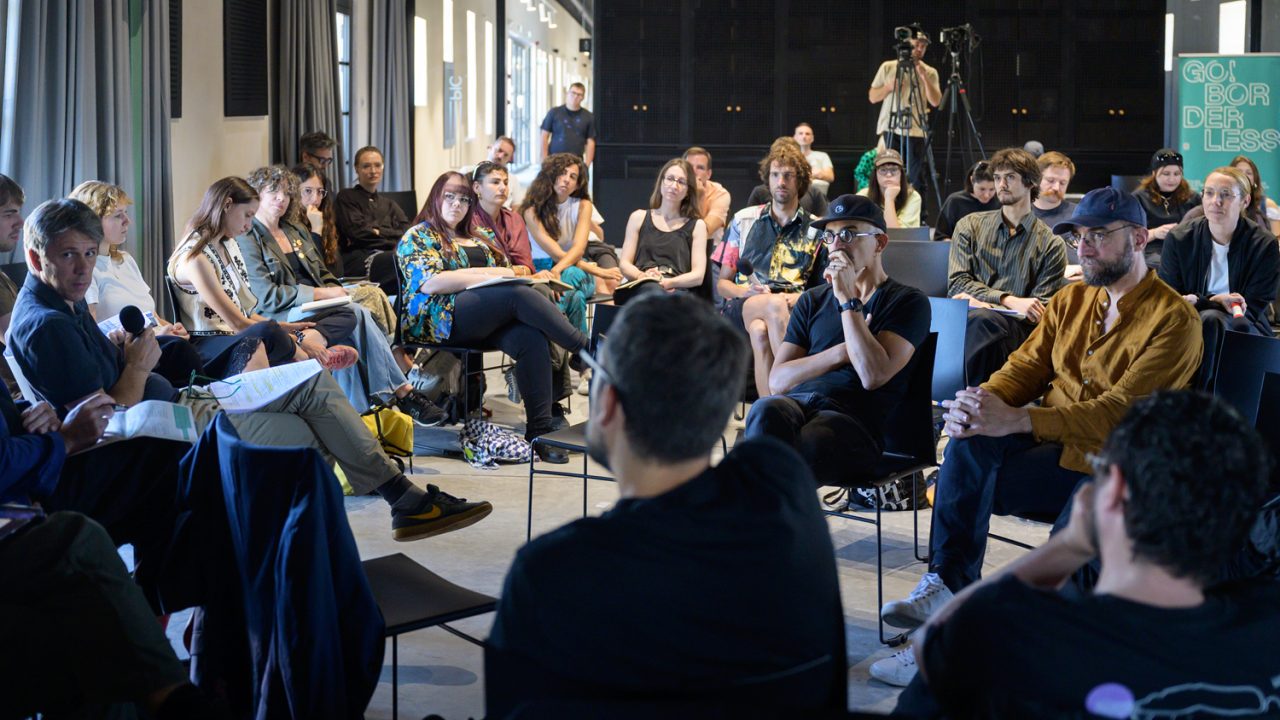
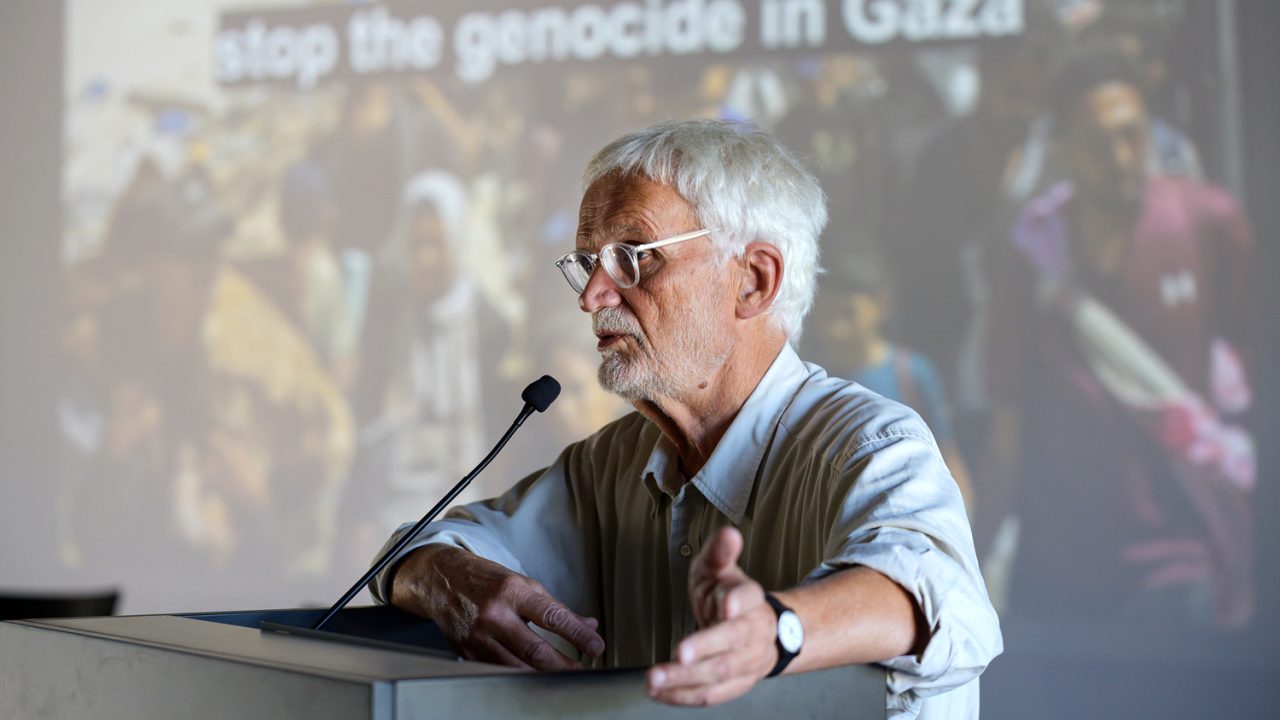
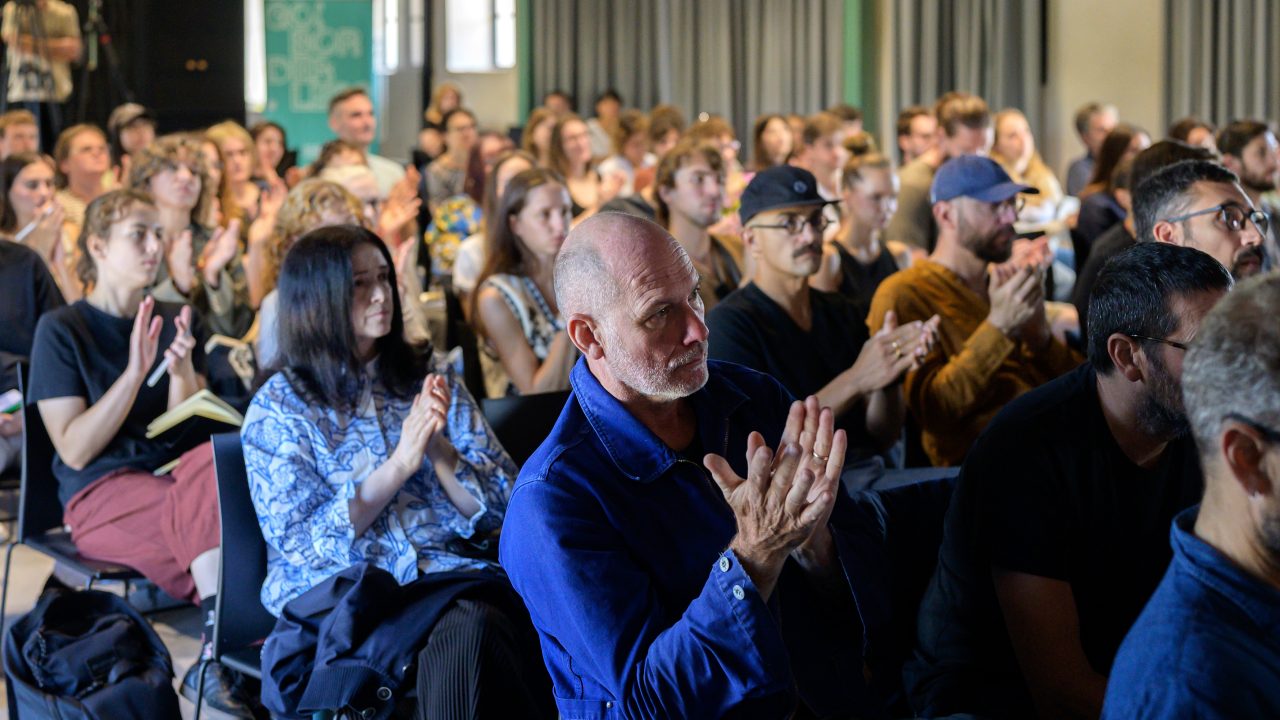
The symposium RECLAIMING HOPE: Navigating (Un)certainty, Imagining Better Futures, held on 18–19 September in Nova Gorica, was organized by the Centre for Creativity (MAO) in collaboration with international partners and the organizers of the fifth Design+Science Summer School. It brought together experts from various fields to explore how design and architecture can contribute to a more just, resilient, and imaginative future.


The two-day international symposium, part of the accompanying program of the European Capital of Culture GO!2025 Nova Gorica, opened discussions on the social, environmental, and political challenges of the polycrisis era, as well as the role of creative practices in shaping sustainable solutions.


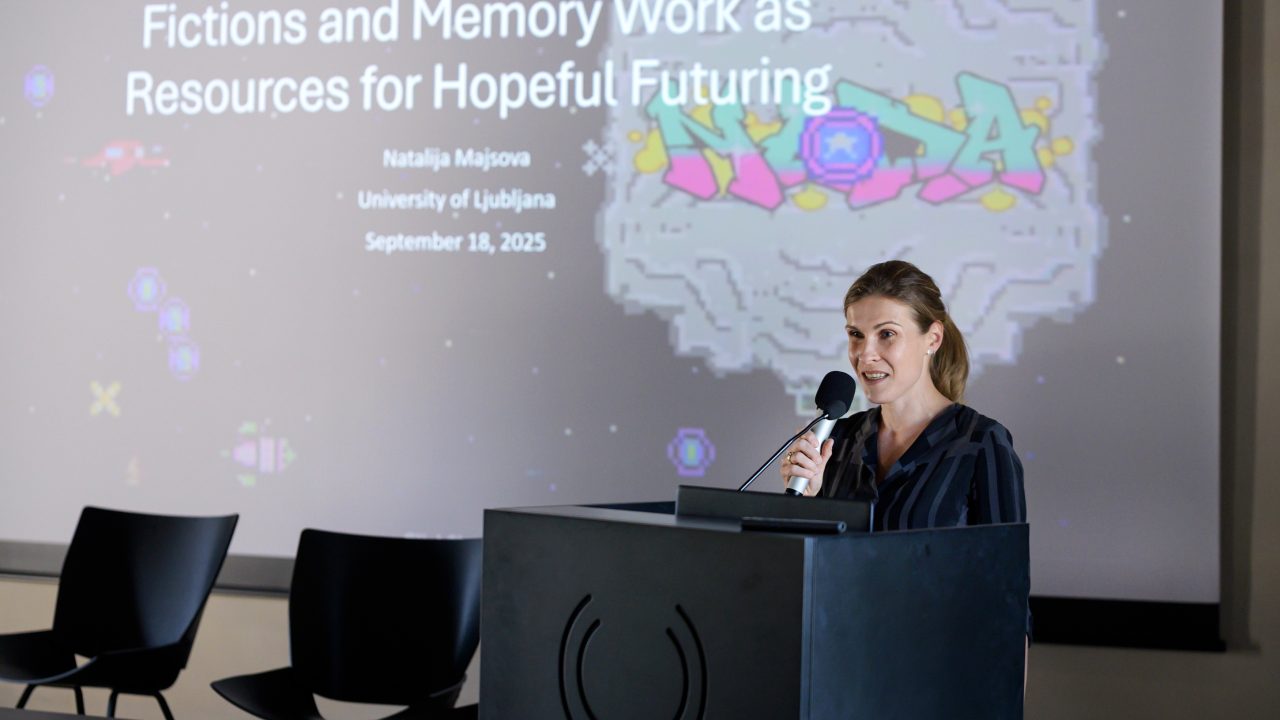
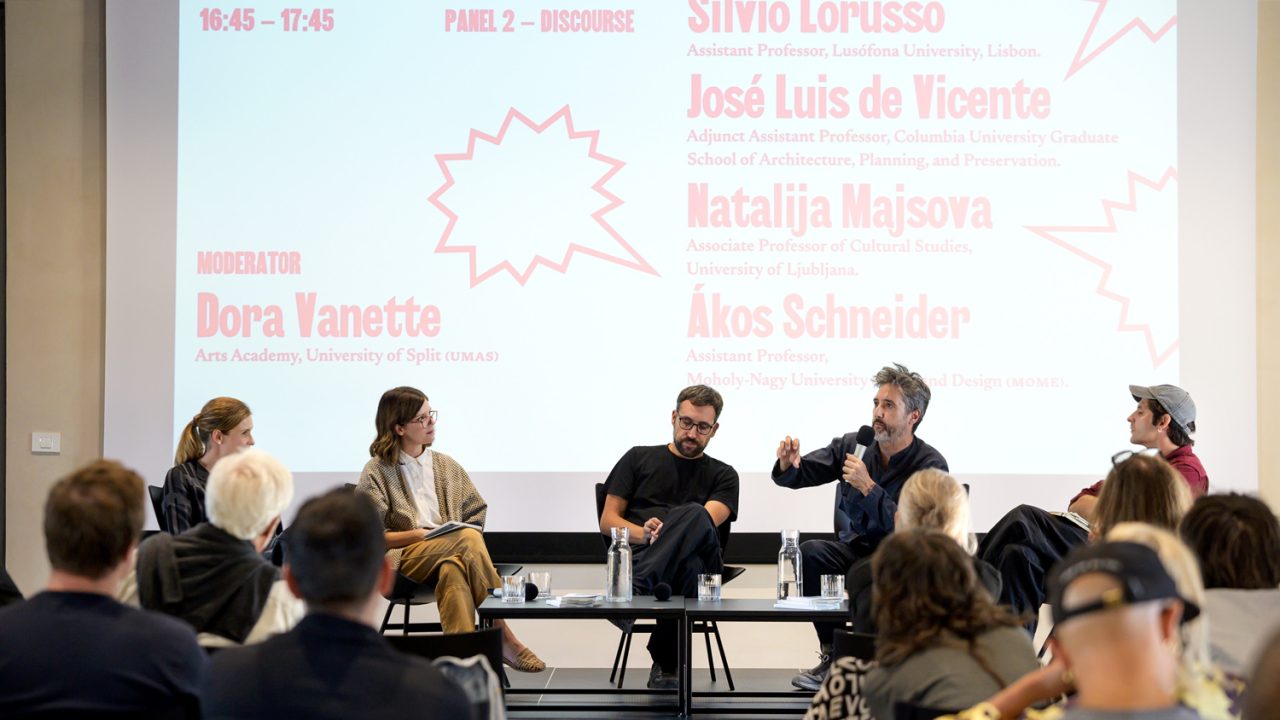
The opening remarks were delivered by Anja Zorko, head of the Centre for Creativity, Ivica Mitrović, curator of the event, and Stojan Pelko. The two days were filled with inspiring lectures, discussions, and professional meetings, featuring Natalija Majsova, Ezio Manzini, and many other experts, including James Auger, Jimmy Loizeau, Silvio Lorusso, José Luis de Vicente, Lodovica Guarnieri, Guillem Camprodon, David Martens, Ida Križaj Leko, Seçil Uğur Yavuz, Ákos Schneider, Miriam Kathrein, Gerin Trautenberger, Alexander Diesenreiter, Maja Šuštaršič, Lourdes Rodriguez, and others.


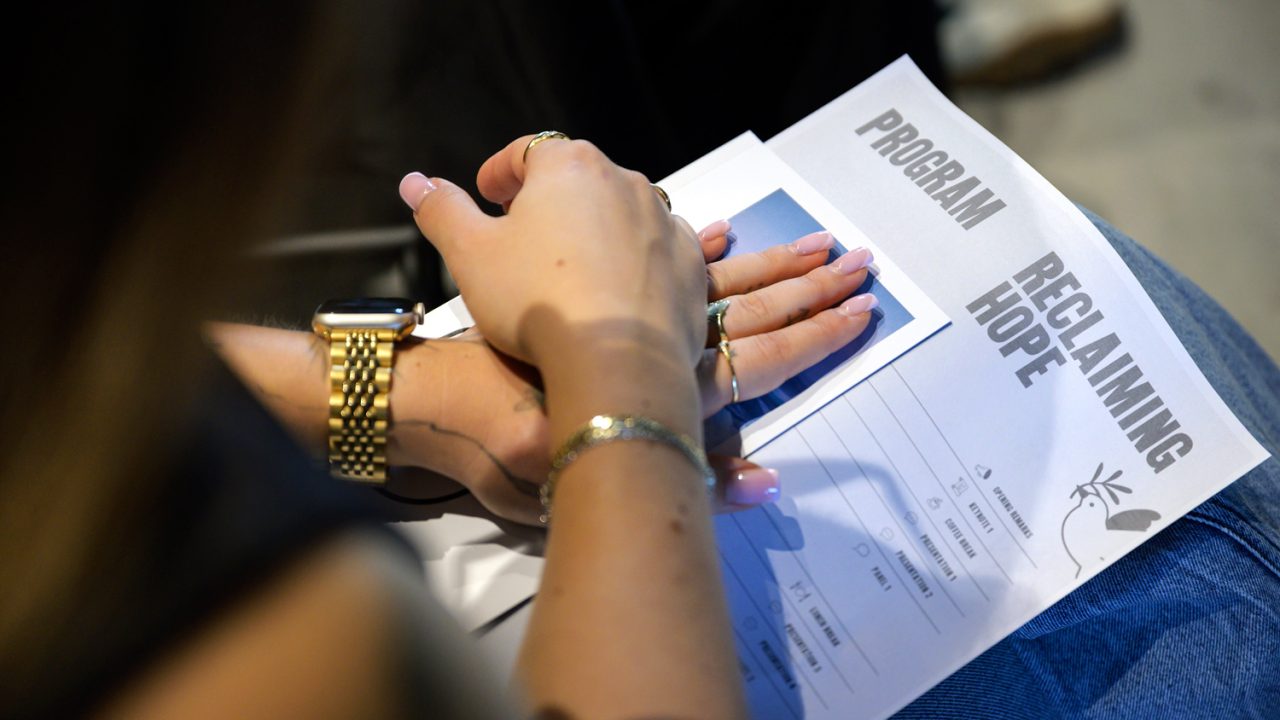
The program included lectures, presentations, and panel discussions, complemented by morning coffee meetings and workshops, which allowed for in-depth reflection on the impact of design and architecture on social processes and relationships. The symposium was followed by the Design+Science Summer School, promoting experimentation at the intersection of design, science, and art, and bringing together participants from a wide range of disciplines.


The event provided insights into innovative, critical, and speculative practices, opening new possibilities for understanding the future and strengthening the role of the creative sector in shaping social change.


Event photos (flickr)

In January 2025, the Centre for Creativity/MAO launched an open call for product proposals for the online catalogue of the selection of Slovenian gifts under the MADE IN SLOVENIA brand, selected by CzK. The call for proposals received 277 products from 117 different applicants working in different areas of the CCSI by the deadline of 19 March 2025. The Expert Committee welcomed the large number of applications and the diversity of the proposals received. In the first round of selection, which took place online between 24 March and 1 April 2025, the jury shortlisted 83 products that best met the objectives and criteria of the call for proposals.


The applicants of the products shortlisted for the second round were invited to physically submit their products to the jury for evaluation. The jury made the final selection on Wednesday 16 April 2025. The seven-member expert jury was composed of Maja Bahar, National Museum of Slovenia; Barbara Hiršman, Protocol of the Republic of Slovenia; Barbara Jaki, National Gallery; Primož Jeza, ALUO; Katjuša Kranjc, Raketa; Maja Vardjan, MAO; Mina Žabnikar, Grupa Ee.


On the basis of a review of the submitted products, the jury unanimously selected 50 products, in accordance with the criteria of the call for proposals, which scored 60 points or more in the final overall evaluation of the expert jury and which, in accordance with the call for proposals, are included in the online catalogue of the selection of Slovenian gifts under the auspices of the brand MADE IN SLOVENIA, as selected by the CzK.


The jury agreed that the selected products of Slovenian artists, designers, organisations and companies comply with the criteria of the public call for entries, being sophisticated, bold, innovative and distinctive. They are distinguished by the quality of the materials used and their excellent physical execution. The products are functional and suitable as a gift for a variety of business and protocol occasions. The selected products reflect the important values and characteristics of Slovenia as a green, creative, smart country through the rich cultural, economic, environmental, technological or social identity and heritage of the Republic of Slovenia and the national brand I Feel Slovenia and Made in Slovenia. The selection of Slovenian gifts will help to increase the diplomatic, cultural and business visibility of Slovenia.


The editing of the catalogue is scheduled for May and June 2025, and the publication of the catalogue in September 2025.


Such calls encourage the development of product designs suitable for corporate, occasional and protocol gifts, as well as smaller-scale product designs more broadly. Continuous public calls and selections of Slovenian Made in Slovenia gifts raise the quality of design production and, by publishing on the website, allow a direct link and comparison of this product segment. At the same time, they open up business opportunities for Slovenian creators both locally and internationally. Through their conceptual and design approach, they present a vision of modern Slovenia and contribute to its diplomatic, cultural and business visibility in the international arena.


Due to the overwhelming response from partners and applicants, the Centre for Creativity will continue to build on the CzK selection and continue the open call in the coming years.


Carniolan honey bee – gilt pin badge, Galerija Oskar Kogoj d.o.o.

Slovenian jug, Galerija Oskar Kogoj d.o.o.

Empress Barbara cup, Galerija Oskar Kogoj d.o.o.

Empress Barbara cup with gilded handle, Galerija Oskar Kogoj d.o.o.

Owl – gilt pin badge, Galerija Oskar Kogoj d.o.o.

Energy cup – large, Galerija Oskar Kogoj d.o.o.

Energy cup – small, Galerija Oskar Kogoj d.o.o.

Energy cup – large with gilded handle, Galerija Oskar Kogoj d.o.o.

Energy cup – small with gilded handle, Galerija Oskar Kogoj d.o.o.

Gratitude bird with gilded beak, Galerija Oskar Kogoj d.o.o.

Cahiers and Notepads SCH Stationery, Ajda Schmidt

SCH Stationery Yearbook, Ajda Schmidt

Serving Tray Mirin, Špela Šedivy

Stone Soap Holder Tolm, Špela Šedivy

CLOUDY, Tanja Pak

A Drop, Tanja Pak

Lake in the Rain / Glass, Tanja Pak

CRYSTAL PENDANT, Tanja Pak

LIGHT CLEAR, Tanja Pak

Silver brooch Smoketree, Katja in Nataša Skušek

Silver brooch Dandelion, Katja in Nataša Skušek

Piran Days of Architecture Scarf, Galerija Dessa

The Little Spoon, Maja Kotar

Silver Lapel Pin “Fabiani’s Roses”, Lucija Perko

Silver cuff-bracelet “Fabianis Roses”, Lucija Perko

Silver Necklace “Fabiani’s Roses”, Lucija Perko

Silver Hair cuff “Fabiani’s Roses”, Lucija Perko

Wooden creative kit Konstrukta, Festival lesa

Metamorphoses, Eva Rohrman

Iconotheca Valvasoriana Silk Square, Galleria l’arte di seta: Lidija Drobež, Sašo Urukalo,

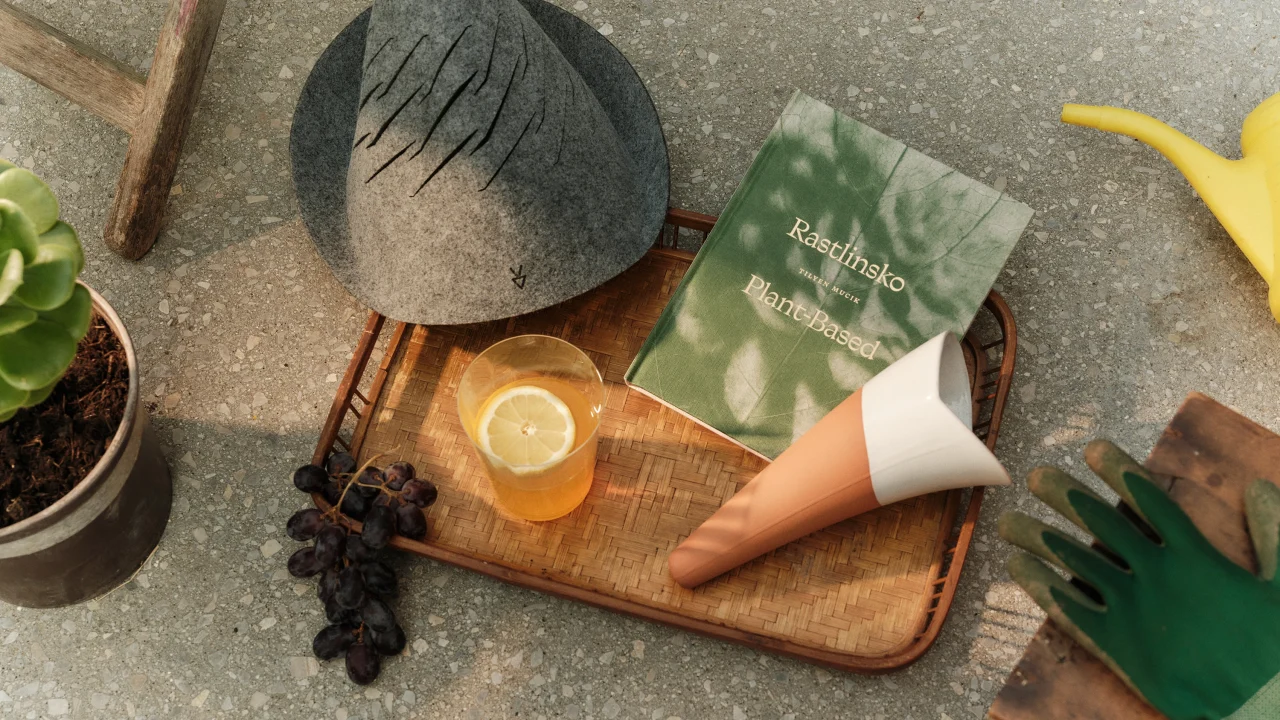
Plant-Based book, Tilyen Mucik

Honey sticks in a exclusive packaging, Lucian Perger

slovETNO socks triglav flower, JKHidentity / Julia Kaja Hrovat
Trnič Doroteja Narat

Caroto gardeners’ gard,  Dušan Grobovšek

Stamp Box, Jelisaveta Marković

Chocolate pears on stalk, Tomaž Sotošek

Brooch Silk Linden Blossom, Rebeka Lucijana Berčič

Brooch Silk Chrysanthemum, Rebeka Lucijana Berčič

Brooch Silk Bouquet of Carnations, Rebeka Lucijana Berčič

ORNI wooden hangers, Eva Štrukelj

Vuvu, Olla Irrigator, Črt Štrubelj

Brin Gin, Erik Sarkic

WOOD‘N’ROLL – skipping rope, Metod Burgar

Center for Creativity continues the selection of products for the Made in Slovenia gift catalog. We invite applicants to submit products that reflect Slovenia’s values and characteristics across various fields and emphasize Slovenian identity.


Through identification and expert selection of products by Slovenian creators, designers, authors, organizations, or companies, a collection of top-tier Slovenian products and official gifts of the Republic of Slovenia is curated under the Made in Slovenia brand. From the submitted proposals, a professional committee will select products to be included in the online catalog www.madeinslovenia.design. This catalog showcases outstanding Slovenian products, creators, organizations, and companies that contribute to Slovenia’s diplomatic, cultural, and business recognition. So far, 57 products have been included, selected by the expert committee based on the call’s criteria.


The catalog offers a high-quality selection of uniquely designed and conceptually original Slovenian gifts for various occasions and in different price ranges, enhancing Slovenia’s diplomatic, international, and business recognition. Preference is given to products valued up to €50.


A key goal of this public call is to actively promote high-quality selections and foster the development of such production.


Application Deadline: March 19, 2025

Selection Announcement: End of April 2025


Milano Design Week

Curatorial team for the Slovenian presentation at Milan Design Week 2025

7.–13. Apr 2025

Alcova | Milan

The project MATERIAL BAR, by the team of Bor Pungerčič, Katarina Dekleva, Rok Oblak and Boris Kralj, was selected in a call for proposals by the Centre for Creativity for a curatorial presentation at Milan Design Week 2025. The event will take place between 7th and 13th of April.


The expert committee recognized the project, submitted by a group of experienced and renowned authors, for its conceptual excellence, originality, recognisability, and boldness. In addition to the well-crafted concept, the proposal is distinguished by its dynamic presentation and sustainable approach. A particularly striking feature is the vivid and interactive presentation, which involves both the project’s exhibitors and the visitors of Milan Design Week. The interaction among daily creative processes, which interconnect, further enriches the presentation and makes it more accessible and engaging. In light of the sustainable approach, the committee also acknowledged a strong commitment to investing in human resources, reflecting a focus on the development of knowledge and collaboration rather than the use of new materials. This highlights the project’s long-term vision and its responsibility toward a sustainable future.


MATERIAL BAR’s statement on the concept and setting (Bor Pungerčič, Katarina Dekleva, Rok Oblak in Boris Kralj):


“The exhibition will be designed as a point that will connect persistent, interesting, progressive, and independent Slovenian creators who work in the local environment. These designers and their work are resistant to change and have a positive impact on society and the community. Through their work processes, they not only make a living, but also build and improve the world around them. The concept is based on a system of complementary roles, where each creator has their own place and contributes to the common space of operation.

It is a temporary base where creators with limited resources persist, connect, and build a new Slovenian design identity. It places social capital and the related social contribution generated by the presented practices into the foreground. It is designed as an open space in which activities and processes are presented as social events.

Their work transcends the current trends and stands out from the mainstream design scene with unique, original initiatives that have emerged from local contexts and personal visions. The designers do not work out of the need for a quick return, but follow sustainable principles, creating solutions that take the limited resources into account and have a strong focus on fair and well thought out production.

The main concept of the Slovenian presentation at the Milan Design Week 2025 focuses on innovative, environmentally, and socially responsible design practices and designers who not only make a living through their work processes, but also build and improve the world around them.

The project does not invest in new materials, but in human resources, thereby demonstrating responsibility for a sustainable future and the development of knowledge and cooperation.”

“In a space measuring approximately 85m2, individual exhibitors will use interactive installations with which they will provide visitors with an in-depth experience and insight into their work. The programme will run for six days and will consist of various presentations by authors and groups that will connect everyday creative processes through interaction. Such an approach will further enrich the presentation and make it accessible, dynamic, and attractive for visitors as well as exhibitors.”


Curatorial concept:


The central concept of Slovenia’s presentation at Milan Design Week 2025 highlights innovative, environmentally, and socially responsible design practices that not only sustain themselves through their work but also build and improve the world around them. The presentation is designed as an interactive demonstration of creative processes. In addition to exhibited products and artifacts, the space will host collective events such as a temporary restaurant, workshops, and a club. It is a community space, a dynamic and hospitable social hub that remains open to engagement.


The exhibition is based on the principles of “action design”—an approach that focuses on practical actions, testing ideas in everyday use, and real-time adaptation based on feedback. Design unfolds through specific actions and interactions involving users, materials, and unique environments. “Action design” merges creativity with real-time responsiveness, emphasizing ideation and collaboration to develop innovative solutions for contemporary challenges.


The selected projects and designers have successfully incorporated these principles into their daily practices for years. Through design and mjuarketing processes, they have developed autonomous practices, proving that there are always new ways of operating that can inspire future generations of designers. Their ideas stem from their creative aspirations, market needs, and sustainable approaches grounded in material availability.


Selected Designers and Collectives:

  • Collective Made in Anselma,
  • Gaja Pegan Nahtigal, designer,
  • Eva Pavlič Seifert and Aljaž Celarc, the artistic duo P L A T E AU R E S I D U E,
  • Nika Ravnik, fashion designer
  • design collective Pjorkkala, consisting of Žan Girandon, Pia Groleger, and Luka Pleskovič,
  • Nina Mršnik and Nuša Jelenec, Pečeno pohištvo,
  • interdisciplinary collective Prostorož,
  • Miha Šajina, producer, sound designer, and DJ,
  • Rok Oblak, creating under the name Salto Dionys,
  • Primož Turnšek and Rok Zalar, founders of Gobnjak,
  • company Gin Brin.

The exhibition will be presented at Alcova, as part of Milan Design Week 2025, and serves as a showcase for Slovenia’s innovative and sustainable design practices. Alcova, known for hosting cutting-edge, experimental, and socially conscious design projects, provides the perfect platform for highlighting the country’s commitment to creativity, collaboration, and sustainability.


The project is part of CzK’s internationalization programs, through which the center aims to incorporate a diverse range of young-generation curators, designers, collectives, and other professionals into the selection and presentation of contemporary Slovenian design and creative production. Together with the Centre for Creativity, they will develop the final concept for presenting contemporary Slovenian design at various international venues.

Rok Oblak

Rok Oblak graduated from the Academy of Fine Arts and Design in Ljubljana in 2011 and received his master’s degree in Applied Arts from the Emily Carr University in Vancouver, Canada. During his studies, he specialized in the development of DIY cooking stoves for developing countries, which were made of local clay and used home-made biomass briquettes as a sustainable energy solution. His projects “Mdula” and “Holey Roket - open source vernacular design” received a gold medal at BIO19 and a gold medal from the Canadian Governor General for special academic achievements. Rok Oblak is currently working in Ljubljana as a freelance artist in the fields of experimental design, pottery and development of biomaterial products. He co-founded the Studio Levo craft workshop and is a collaborator in the Krater creative laboratory. He produces limited edition extruded decorative homeware under the Salto Dionys brand.

Katarina Dekleva

She received her master’s degree in Architecture from the Faculty of Architecture at the University of Ljubljana. Working in Slovenia, her design practice is multidisciplinary, focused on sustainable principles and responsible interventions, often involving participatory design, promoting environmental awareness, a “do-it-yourself” approach, connecting and incorporating skills from disappearing cultural heritage and crafts. She was a member of the Regeneracija collective, Studio Levo and Poligon. Influenced by her formal education and curiosity, she often ponders established practices and the future of architecture, the distribution of resources, the role of regulations and the individual, while at the same time enjoying her design assignments. Completed and exhibited projects include the use of invasive plants (Prijateljski sovražnik), planning of community green spaces and activities (Užitni park Muste, Recept za park, Ilirska Bistrica), object design (Kozarec Zvonko, Design Dining).

Boris Kralj

Boris Kralj graduated from the Academy of Fine Arts and Design – the Visual Communication Department. He received his master's degree for his integrated graphic design for the social campaign "No GMOs!", designed for the Institute for Sustainable Development under Prof. Ranko Novak. During his studies, he furthered his skills in Polish poster design under Prof. Kunce at the Academy in Krakow, and in Information Graphics and Corporate Identities at Ravensbourne University, London. He works in Ljubljana as a freelance designer, collaborates with the University of Nova Gorica, the company LoginEko, and also works as an art director at the agencies Interavti and Votan. His favourite visual medium is the poster, and his works have been exhibited at the Poster Biennial in Warsaw, the Brumen Festival and awarded at the Plaktivat competition.

Bor Pungerčič

Bor Pungerčič completed his studies in architecture at the Faculty of Architecture, University of Ljubljana. During his studies, he received the Piranesi student award at the Piran Days of Architecture for his project to renovate an industrial building in Kubed. Following his graduation from the Faculty of Architecture, he completed additional studies in contemporary dance and performance at the international Nomad Dance Academy and worked for three years as a set designer and performer in Slovenia and abroad. ​​Together with the architectural company MX-SI Architects in Barcelona, he, in 2010-11, prepared a project to renovate the Rog Factory in Ljubljana into the city's Centre for Creative Industries. In 2011-12, he collaborated with the BIG Institute as the editor of the magazine Hiše and curator of the Oder 180 event at the BIG architectural conference and at the Month of Design. n 2022 he received the ZAPS Golden Pencil award for his work together with Petra Stojsavljević.

Workshop

Melting Workshop

29.1.2025 Alpe-Adria | 8.2.2025 MAO

The workshop is an interactive experience that combines the traditional craft of beekeeping with an exploration of the possibilities offered by the natural material beeswax for design. Visitors will be invited to explore the materiality of beeswax through the melting and cooling process, discovering its diverse possibilities, while developing their creative and collaborative skills.


The dates of the workshop:

  • 29.1.2025 from 10:00 to 19:00, Alpe-Adria Fair at the Ljubljana Exhibition Centre, Ljubljana Tourism stand
  • 8.2.2025 from 15:00 to 18:00, Museum of Architecture and Design


Join a workshop where you will explore the materiality and creative possibilities of beeswax through melting and shaping.


More information>>


On Tuesday, December 18, 2024, the 4th edition of the Competence Center for Design Management launched in Ljubljana with the meeting of all partners, including the Center for Creativity and the Museum of Architecture and Design. The project, which has been connecting ambitious Slovenian companies with design management expertise since 2013, is gaining recognition abroad.


The project was founded in 2013 by a group of Slovenian designers and consultants, with the aim of helping their clients better understand design and exploit its potential to increase the added value and market success of their brands.


First edition connected 21 companies, and the design and results of the project were awarded the first Design Value Award in 2016 by the Design Management Institute, which is considered the leading organization in the field of design management in the world. In the second edition (2017-2019), 37 companies joined the project, funded by the Ministry of the Economy, Tourism and Sport, and the third edition (2020-2023) was joined by 56 companies. This year the project was awarded the Good Design Australia Award.


In its fourth edition, the project will focus on the challenges that prevent companies from expanding and implementing effective, cyclical innovation, which is essential for survival and success in today’s uncertain world.


“Although the companies in the partnership are very diverse, years of experience have shown that the key obstacles that stand in their way of becoming market leaders are often the same. With knowledge in the field of design, including planning of business processes, management of cyclical non-technological innovations and identification of user needs, we want to support them in successfully overcoming these obstacles during the project that will be implemented in the next two years,” said Miha Klinar, manager of The Competence Centre for Design Management


In February next year 38 partner companies will begin their training. In addition to attending international conferences and educational programs with selected international lecturers, employees will learn about the potential of strategic use of design through mutual exchanges of examples of good practices.


More information >>

Next Gen Design project brings together young people and designers to learn together, exchange ideas and develop innovative solutions for sustainable design. It is supported by the European Union through the Creative Europe program and brings together five leading European design platforms and festivals: Skopje Design Week (Public Room), Mikser Festival from Belgrade (Mikser), designaustria from Vienna, What Design Can Do from Amsterdam and Barcelona Design Week (Barcelona Design Center).


In order to find out first-hand the opinion of young people on environmental issues and knowledge about the European Green Deal, a survey was launched as a key part of the project. By completing it, everyone between the ages of 18 and 35 influences the creation of an open call, expressing their views on the aforementioned topics. After closing, the results of the research will be publicly available to all organizations that work with young people, in the form of a publication, which will be found on the project platform.


Take a survey >>


This initiative is a key step towards creating a future where sustainable design is the norm. By equipping young designers with the tools and knowledge to drive change, the project aims to encourage European countries to move towards a more circular economy and reduce the impact of climate change. Through innovative education programs and digital initiatives, the project aims to shape the future of design but also to contribute to wider climate action.


More information >>

The Quilted Blanket of Life by Nina Vastl Štefe, which was presented as part of the Center for Creativity exhibition Crafting Futures, is nominated for the Maestria Award – European Prize for Applied Art (EPAA). The prize is awarded to the best creations of contemporary creation in the field of applied art and craft design by the World Craft Council Europe.


The Quilted Blanket of Life is a timeless textile piece dedicated to the stories of an individual, a family or a place. The blanket is created for important moments in life: birth, death, marriage, leaving home, for moments of encouragement, joy or honor. It is useful as a blanket, bedspread, picnic blanket, rug, curtain, room divider or wall decoration. But it can also serve as a special ritual textile reserved for special occasions. With the Quilted Blanket of Life project, Nina Vastl Štefe creates an intimate textile heritage that can be passed on to the next generation, preserved or added to a new part of the story. It is more than just a textile, it is a diary of life, stitched, sewn onto fabric.


Maestria – The European Prize for Applied Arts (EPAA) was given in 2009 for the first time to the best creations of contemporary creation in the field of applied art and craft design. This year the awards ceremony will take place on November 24, 2024, the day of the opening of a major exhibition bringing together some of the finest makers on the contemporary applied arts scene at the Anciens Abattoirs in Mons. This sixth edition will showcase around 100 unique pieces by 58 artists from 16 different European countries. The exhibition aims to show some of the finest work produced in Europe, displaying a range of perfectly mastered techniques with high aesthetic standards. Ceramics, glass, metal, wood and paper crafts and contemporary jewellery, will all be represented. Besides the skills required to produce these creations, their contemporariness is an important element. Current makers are going beyond the traditional codes and thinking “outside the box”. New materials and new techniques are being incorporated into the traditional recipes to create an art form that is both modern and ancient, codified and reactionary.


Two prizewinners will each be awarded 3.500€, thanks to the support of the World Craft Council Europe and the Ministry of Culture of the Fédération Wallonie-Bruxelles.


More information >>

BIO28: Double Agent: Do You Speak Flower? features a production platform developed with the Centre for Creativity, showcasing interdisciplinary teams mentored by renowned creatives. These teams explore the coded language of flowers and their connection to marginalized groups:


  • Beeswax Studio and Grotto by XenoScapers Collective mentored by Matali Crasset, merges beeswax with digital projections to explore the grotesque qualities of matter in a wax-based hyperspace.
  • (Un)wowen tales, mentored by Dimitri Zephir and Florian Dach, juxtaposes Slovenia’s lace heritage with the erasure of stateless individuals in 1991, challenging ideas of nationality and belonging.
  • I’ll be Poppy by El Ultimo Grito is an experimental film blending documentary and fiction. A documentary movie by OSM films reflects on BIO’s 60-year evolution and its creative processes with the help of Maja Šuštaršič.
  • Movement for Public Speech by Prostorož mentored by Polonca Lovšin, presents Murmuring Orchids, an installation using orchids as metaphors for women in precarious housing.
  • Cattleya by YASA Collective, mentored by Grashina Gabelmann and Michelle Phillips, reclaims the floral metaphor in Don’t Teach a Flower How to Bloom. Through posters and a web platform, the project deconstructs femininity stereotypes, revealing the resilience of flowers and a web platform, the project deconstructs femininity stereotypes, revealing the resilience of flowers and women.


More information >>


The third edition of the Creative Incubator, educational and mentoring program of the Center for Creativity, which helps creators develop entrepreneurial competencies for a more successful performance and presentation on the market, ended with a public presentation at the Demo Day event, which took place on October 3, 2024 at the Museum of Architecture and Design. Fourteen teams participated in the program and developed their creative brands. First place and a financial incentive of 10,000 euros were awarded to the creators of Lou and Co., a company specializing in the sale of fashionable and sustainable dog accessories, who, according to the expert committee, made the greatest progress in the development of their project.

The prize winners, who received financial incentives and other prizes, were chosen by the expert committee of the Center for Creativity, composed of Assoc. prof. Rok Kuhar, Academy of Fine Arts and Design, Peter Ličen, director of Lushna d.o.o., Assist. prof. dr. Aleš Pustovrh, Faculty of Economics, Niko Slavnić, investor and entrepreneur, and Meta Štular, assistant director, head of strategic development and programs at Rog Center. Participating teams that took part in Creative Incubator were selected by an expert committee from 37 applications received in May of this year.

The second place was taken by Aljaž Škarabot, a passionate mountain biker who, out of his own need, developed the idea of a new product – a carrier for the Apeak full face helmet and received a financial incentive of 5,000 euros. The third place and a financial incentive of 3,000 euros went to Little Otja, a brand of home products designed for modern families and created in the visual communication studio Pikto. Fourth place and a financial incentive of 1,000 euros went to Andraž Grulja, who founded the Stitchuation, an imaginative tapestry-making kit that defies productivity and encourages enjoyment of the sewing process. The package for the use of the Rog Center’s laboratories for a whole year worth 390 euros for the project with the best presentation, chosen by the participants of the program, was awarded to the design studio Jugošik, founded by the architect and designer Nina Savič, who connects modern design with the heritage of the Yugoslavian lighting and furniture industry through renovation and transformation of the old pieces of furniture into unique products. The FOLDS team, which focuses on creating metal objects for home, and the Kaaita team, which produces slippers for boutique hotels in Europe, received special praise from the expert committee for the successful development of the projects and the progress achieved in the program.

Aljaž Škarabot

Aljaž Škarabot is a passionate mountain biker who developed the idea for a new product out of his own need - a full face helmet holder. We can use so-called "full face" helmets when going downhill on mountain biking trails, which protect us from more serious head injuries in the case of a fall, but such helmets are very impractical to wear when cycling uphill. For this reason, he developed a more practical special holder. With experience in sales, organization and marketing, he independently tackled the project, which is currently in the prototyping phase.

Berwood, Marko Bertoncelj

After twenty years a childhood desire to build a wooden house developed into a wholesome project of creating a glamping house. The innovative design enables modular construction and better utilization of space. The house is made of sustainable materials, mostly by Slovenian wood. A special detail is the larch door, made by the author. The glamping house is ideal for escape from the everyday hustle, where you can rest in peace and enjoy the embrace of nature.

Brinas Studio

Brinas Studio brings to life the colors of nature and its pigments. The organic iridescences on the textile reflect those hidden in the stone, bark, on the surface. The colors express her wild strength and gentle grace. Each piece is hand painted and completely unique. In addition to clothing, accessories and ritual pieces, a new line of products is being developed within the framework of the Creative Incubator - the most important, the most intimate ones.

FOLDS

FOLDS is a design brand founded by Anja Mencinger and Nikolaj Salaj during their studies. The brand focuses on creating metal objects of larger and smaller dimensions. The creations are characterized by the idea of playful simplicity and functionality, many of them are based on interaction with the user. FOLDS currently collaborates with twelve small producers in Slovenia and Italy. The brand combines creativity and entrepreneurship and connects young Slovenian creators with local producers.

Jona Bednjanec

With her knitwear brand, Jona Bednjanec is present in stores, specialized in young independent designers across Europe and America. She presents her knitwear collections as part of Ljubljana Fashion Week and regularly collaborates with Slovenian designers and artists. Her work is also represented by special art projects. She is also actively present in various pop-up events, such as Pop-UpStart in collaboration with the Center for Creativity in Maribor (2019), a pop-up sales exhibition in collaboration with 5WAY in Milan (2020), Res-res pop-up in Copenhagen (2022) and the annual December Christmas tree in Ljubljana.

Jugošik interier

Design studio Jugošik, owned by the architect and designer Nina Savič, combines modern design with the rich cultural heritage of the Yugoslav lighting and furniture industry. Today, forgotten "jugo" pieces often end up in the bulk waste pile. Jugošik carefully stores, disassembles and restores them. Lamps, cabinets and tables are not reassembled back to their original state. Individual parts (glasses, doors, drawers, legs ...) are sophistically used in the creation of new "chic" products, where forgotten pieces get their happy ending.

Kaaita

Creative studio Kaaita, in its own manufactory in the very center of Ljubljana, designs and manufactures slippers for charming hotels scattered all over Europe. The team consists of Alenka Repič, Jacqueline Keck and Zala Česnik. In times, when sustainable concepts are completely changing the attitude towards hotel slippers, Kaaita adds Kaaita Waterproof slippers to its portfolio. A product, searched for by existing and potential hoteliers and in line with a concept that puts quality over quantity.

Little Otja

Small gifts that create big memories. Little Otja is a brand of home products created by the company Pikto, a studio for visual communications from Ljubljana. Their products are meant for modern families and all those who would like to bring playfulness and liveliness into their home. Their work is based on quality design with an emphasis on the development of limitless imagination.

Lou & Co.

Lou and Co. is a company specialized in selling fashionable and sustainable dog accessories that match the owner's style. All products are designed and made in Slovenia. At the Creative Incubator, they are presenting a dog snood product that protects the dog's ears from dirt, infections or grass that gets into the ear canal. Snoods are sewn in-house, which allows for personalization and differentiates the product from the competition. The company donates part the purchase to charities.

Lufta

Lufta is an interdisciplinary collective, which currently consists of a team of three individuals: architect Matic Hlede, entrepreneur Jan Jandl and scenographer Lin Martin Japelj, brought together by a common interest in designing useful everyday objects. This is how the inflatable chair Lufta, made of dropstitch material was created. Lufta are innovative, environmentally friendly products! They identify with modern, ecological awareness and versatile design. The easy assembly and disassembly of the recyclable components make them a smart choice of furniture. Lufta is the perfect blend of technology and sustainability.

Pecūliar

Something always remains of you. With Pecūliar, you can freely spill over the frames into which society so diligently presses you, through - your own and that of others - (mis)understanding, which stinks of artifice, past beliefs and habits that force you into the same regrets over and over again. With totally weird digital templates that firmly reject the capitalist greyness, you can easily and memorably stand out and start visualizing your story in a completely different way. Pecūliar is created by Luka, Lovro and Lucija from lifelong creative deposits.

Stitchuation

Stitchuation is for everyone who likes to stitch tapestries on one side and to patch life on the other. Resist productivity with a needle and enjoy the dopamine microdosing that every stitch brings you. Stab after stab. Even those of you who are still tapestry innocents, don't worry. In the starter kit, you get everything you need to sew your first piece of art. Their first "Maze" collection will discover ways to orgasms, search solutions in the balance and avoid anxiety.

Vuvu

Vuvu is a ceramic soil moisturizer that works according to the olla principle of passive watering. It is suitable for indoor and outdoor plants in pots. It is made of porous low-temperature fired ceramic. Through osmosis, this porosity allows plants to be watered according to their needs. Vuvu is a product that helps to understand the needs of house plants, promotes rational use of water and has a positive impact on the environment. It was designed by Črt Štrubelj and Luka Bernik based on the principles of regenerative design and vernacular models. The team also consists of Andrija Mihajlović, Domen Klinc and Nia Gombač.

Presentation

Creators developed their brands as part of the Creative Incubator

3 oct 2024

| 14:00

MAO, Ljubljana

The third personalized edition of the Creative Incubator program started this spring in the Center for Creativity. Among 37 applications jury of experts selected 14 creative teams to take part in the program. In the last few monts selected teams participated in an educational-mentoring program under the guidence of menthors from the community of the Center for creativity. The authors upgraded and further developed their entrepreneurial ideas which will be presented to the public at the Demo Day, taking place on October 3, 2024.


At the event, the best ideas will also be selected from all the teams, which will receive a financial incentive for production in the value of:

  • 10,000 EUR
  • 5,000 EUR
  • 3.000 EUR
  • 1.000 EUR
  • Package for the use of Rog Center laboratories for the one year period in the value of 390 EUR. The project will be selected by the participants of Creative incubator program.


You can read more about the brands and teams in the “creative brands” tab.


Aljaž Škarabot

Aljaž Škarabot is a passionate mountain biker who developed the idea for a new product out of his own need - a full face helmet holder. We can use so-called "full face" helmets when going downhill on mountain biking trails, which protect us from more serious head injuries in the case of a fall, but such helmets are very impractical to wear when cycling uphill. For this reason, he developed a more practical special holder. With experience in sales, organization and marketing, he independently tackled the project, which is currently in the prototyping phase.

Berwood, Marko Bertoncelj

After twenty years a childhood desire to build a wooden house developed into a wholesome project of creating a glamping house. The innovative design enables modular construction and better utilization of space. The house is made of sustainable materials, mostly by Slovenian wood. A special detail is the larch door, made by the author. The glamping house is ideal for escape from the everyday hustle, where you can rest in peace and enjoy the embrace of nature.

Brinas Studio

Brinas Studio brings to life the colors of nature and its pigments. The organic iridescences on the textile reflect those hidden in the stone, bark, on the surface. The colors express her wild strength and gentle grace. Each piece is hand painted and completely unique. In addition to clothing, accessories and ritual pieces, a new line of products is being developed within the framework of the Creative Incubator - the most important, the most intimate ones.

FOLDS

FOLDS is a design brand founded by Anja Mencinger and Nikolaj Salaj during their studies. The brand focuses on creating metal objects of larger and smaller dimensions. The creations are characterized by the idea of playful simplicity and functionality, many of them are based on interaction with the user. FOLDS currently collaborates with twelve small producers in Slovenia and Italy. The brand combines creativity and entrepreneurship and connects young Slovenian creators with local producers.

Jona Bednjanec

With her knitwear brand, Jona Bednjanec is present in stores, specialized in young independent designers across Europe and America. She presents her knitwear collections as part of Ljubljana Fashion Week and regularly collaborates with Slovenian designers and artists. Her work is also represented by special art projects. She is also actively present in various pop-up events, such as Pop-UpStart in collaboration with the Center for Creativity in Maribor (2019), a pop-up sales exhibition in collaboration with 5WAY in Milan (2020), Res-res pop-up in Copenhagen (2022) and the annual December Christmas tree in Ljubljana.

Jugošik interier

Design studio Jugošik, owned by the architect and designer Nina Savič, combines modern design with the rich cultural heritage of the Yugoslav lighting and furniture industry. Today, forgotten "jugo" pieces often end up in the bulk waste pile. Jugošik carefully stores, disassembles and restores them. Lamps, cabinets and tables are not reassembled back to their original state. Individual parts (glasses, doors, drawers, legs ...) are sophistically used in the creation of new "chic" products, where forgotten pieces get their happy ending.

Kaaita

Creative studio Kaaita, in its own manufactory in the very center of Ljubljana, designs and manufactures slippers for charming hotels scattered all over Europe. The team consists of Alenka Repič, Jacqueline Keck and Zala Česnik. In times, when sustainable concepts are completely changing the attitude towards hotel slippers, Kaaita adds Kaaita Waterproof slippers to its portfolio. A product, searched for by existing and potential hoteliers and in line with a concept that puts quality over quantity.

Little Otja

Small gifts that create big memories. Little Otja is a brand of home products created by the company Pikto, a studio for visual communications from Ljubljana. Their products are meant for modern families and all those who would like to bring playfulness and liveliness into their home. Their work is based on quality design with an emphasis on the development of limitless imagination.

Lou & Co.

Lou and Co. is a company specialized in selling fashionable and sustainable dog accessories that match the owner's style. All products are designed and made in Slovenia. At the Creative Incubator, they are presenting a dog snood product that protects the dog's ears from dirt, infections or grass that gets into the ear canal. Snoods are sewn in-house, which allows for personalization and differentiates the product from the competition. The company donates part the purchase to charities.

Lufta

Lufta is an interdisciplinary collective, which currently consists of a team of three individuals: architect Matic Hlede, entrepreneur Jan Jandl and scenographer Lin Martin Japelj, brought together by a common interest in designing useful everyday objects. This is how the inflatable chair Lufta, made of dropstitch material was created. Lufta are innovative, environmentally friendly products! They identify with modern, ecological awareness and versatile design. The easy assembly and disassembly of the recyclable components make them a smart choice of furniture. Lufta is the perfect blend of technology and sustainability.

Pecūliar

Something always remains of you. With Pecūliar, you can freely spill over the frames into which society so diligently presses you, through - your own and that of others - (mis)understanding, which stinks of artifice, past beliefs and habits that force you into the same regrets over and over again. With totally weird digital templates that firmly reject the capitalist greyness, you can easily and memorably stand out and start visualizing your story in a completely different way. Pecūliar is created by Luka, Lovro and Lucija from lifelong creative deposits.

Stitchuation

Stitchuation is for everyone who likes to stitch tapestries on one side and to patch life on the other. Resist productivity with a needle and enjoy the dopamine microdosing that every stitch brings you. Stab after stab. Even those of you who are still tapestry innocents, don't worry. In the starter kit, you get everything you need to sew your first piece of art. Their first "Maze" collection will discover ways to orgasms, search solutions in the balance and avoid anxiety.

Vuvu

Vuvu is a ceramic soil moisturizer that works according to the olla principle of passive watering. It is suitable for indoor and outdoor plants in pots. It is made of porous low-temperature fired ceramic. Through osmosis, this porosity allows plants to be watered according to their needs. Vuvu is a product that helps to understand the needs of house plants, promotes rational use of water and has a positive impact on the environment. It was designed by Črt Štrubelj and Luka Bernik based on the principles of regenerative design and vernacular models. The team also consists of Andrija Mihajlović, Domen Klinc and Nia Gombač.

Exhibition

Slovenian creators presented at the Vienna Design Week

20.–29. sep 2024

Vienna, Austria

Exhibition Crafting Futures | Making the future, which deals with the current topic of connecting modern design production with the rich heritage of handicrafts, was presented for the first time at the Triennial of Handicrafts in the Koroška Regional Museum, and later also in the Museum of Architecture and Design and the Posavje Museum Brežice. The project was developed under the auspices of the European platform Distributed Design, which enabled ten Slovenian creators to co-produce a limited edition series. This year the following works were presented At the Vienna Design Week:


  • Brass Spoon | Uršula Oitzl Magister, Lucija Perko
  • Kočevje treetop | Andraž Rudi Vrhovšek, Festival lesa
  • VuVu |Črt Štrubelj, Luka Bernik
  • Dysfunction | Maruša Mazej
  • Kaduja | Pjorkkala
  • Čebelino | Rok Oblak, Luka Pleskovič
  • Glaze from construction waste | Rok Oblak
  • Corn Dolly | Darja Malešič
  • Oreika | Lara Baler, Boris Ouček
  • Quilted blanket of life | Nina Vastl Štefe


As part of the Vienna Design Week, Design Corner Ljubljana also presented an inspiring overview of the works of Slovenian designers with their own brands and/or production lines. An interesting and thought-provoking exhibition “WATER”, which is also a kind of insider’s guide to the state of modern Slovenian product design, featured following creators: Soft baroque, Lara Bohinc, EQUA, David Tavčar, Kolpasan, Darja Malešič, Pikka, Rok Oblak, Urška Sadar, Prapra, Tanja Pak, Hana Tavčar, Izadora Verlič and Ajda Bertok.


The presentation of Slovenian creators at the Vienna Design Week was accompanied by a round table Catalysts of Change: Innovations at the intersection of design, heritage and technology, where the speakers talked about how to establish an ecosystem in which public institutions, producers such as museums and agencies, designers, architects and other creators – together with companies and other regional partners – play an active role in promoting technological and non-technological innovations.


The results of the public call for Creative Incubator Crouzator 2.0, designed by the Municipality of Slovenska Bistrica in cooperation with the Center for Creativity/MAO, are known.


We are pleased to announce that the following authors have been selected to participate in this year’s program:


  • Ana Krošlin
  • Daniel Ramalan
  • Ines Kresnik
  • Ivana Matuzović
  • Pija Godec
  • Stanislava Pernat


The selected creators will spend the next five months developing their innovative ideas under the guidance of expert mentors. The Creative Incubator will conclude with an event at which the creative solutions and concepts perfected in the program will be presented.

Vienna Design Week

Presentation of Slovenian artists at the International Design Festival

20–29 Sep 2024

Vienna, Austria

In the week from Friday 20 to Sunday 29 September, we kindly invite you to visit Austria’s leading design festival, Vienna Design Week. This year, the festival will take place in Village im Dritten, an urban development project in the heart of Vienna’s Landstraße district. The festival will also host the Crafting Futures exhibiton, presented by the Center for Creativity.


The exhibition at hand is the result of an open call for co-productions of limited-edition series organised by the Centre for Creativity as part of the Distributed Design platform in 2023. Under the call Connecting Contemporary Design, Craft and Trades, 10 works by Slovenian creators were selected to receive a financial incentive and mentoring to design a new product or visibly improve an existing one for the purpose of presentation at the interinstitutional exhibition Triennial of Handicrafts and the Crafting Futures exhibition.


The exhibition will be accompanied by an opening social event with the featured creatives on Saturday, 21  September, and a panel discussion with both the creatives and international experts in the field of design  and art. The panel will explore the integration of traditional crafts and trades techniques with contemporary  design approaches, raising and analysing issues such as the role of cultural institutions, sustainability, ecology,  heritage and the impact of globalisation.


Participating creators: Rok Oblak I Luka Pleskovič I Darja Malešič I Maruša Mazej I Pjorkkala I Andraž Rudi Vrhovšek I Lucija Perko I Lara Baler I Boris Ouček I Nina Vastl Štefe I Luka Bernik I Črt Štrubelj


Don’t miss the opportunity to view Centre for Creativity’s nominees, presented within the Distributed Design Platform Exhibition, the Pjorkkala group, Krater Collective and Darja Malešič, as well as another Slovenian presentation by Design Corner Ljubljana, VODA exhibition.


Partners

With the aim of preparing a national showcase of contemporary Slovenian design and related creative production, the Center of Creativity (CzK) is issuing a call for proposals for the selection of a curatorial, designer and execution proposal for the Milan Design Week 2025. The event is expected to take place between 8th and  13th of April 2025. The exhibition is a part CzK’s internationalization programs and will also take place at other design events in the foreseeable future.


We seek to include a wide range of authors in the selection and presentation of the contemporary Slovenian design and creative production, as well as younger generations of curators, designers, authors, collectives, and other experts who wish to collaborate with the Center for Creativity and help develop a curatorial concept and exhibition system along with presenting the contemporary Slovenian design at various international venues.


The goal of said call is to select a project and project team, which will be working closely with the organizers to develop the concept for the curated national presentation, to identify and select a professional selection of Slovenian creators and projects, products or services and to design and execute the exhibition system for presenting contemporary Slovenian design and creative production at Milan Design Week 2025, as well as at other selected international events and venues.


The call is open to individual authors or interdisciplinary teams of curators, designers (in industrial, product, service, graphic, fashion, and other fields), architects, artists, researchers, and creators from other fields active in creative areas.


BUDGET AND SUPPORT


Under the management of CzK/MAO, the authors of the winning project will have a budget of up to 70.000 EUR, managed by CzK, in addition to the prize money. The selected applicants will also receive additional financial support in the form of venue rental, exhibition security, event organization, international promotion, and other support as outlined in the public call. Beyond production funds, the Center for Creativity/MAO will also provide further support during the exhibition setup and its duration.


AWARDS


  • 1st PRIZE → 5.000 EUR


  • 2nd PRIZE → 1.500 EUR


  • 3rd PRIZE → 1.000 EUR


  • HONORABLE MENTION


Any questions regarding the call can be sent to the email address info@czk.si by August 13, 2024. Please make sure to include “CURATORIAL CALL” in the subject line.


The project submission deadline has been extended to September 15, 2024.


Read more about the invitation in the public call >>

This year, the winners include two winners nominated by the Center for Creativity:
  • Sara Badovinac and Sara Škarica (Sara&Sara), who conducted extensive research on various methods of art display, from traditional gallery showcases to dynamic street fairs. Their research delved into nuanced ways of engaging with artworks, whether presented individually or as part of a collection. They carefully studied examples in various platforms, including galleries, street fairs, retail spaces and more. You can read more about the project at the link.
  • Anže Sekelj and Staš Vrenko (Hex Haus), who designed the HEX Cor digital polyphonic synthesizer with a capacitive keyboard, potentiometers for signal modulation and an adjustable loop. Also available as a DIY kit, the instrument design is optimized for use in a variety of contexts focusing on educational and performative aspects. The components that make up the instrument are 100% interchangeable, which favors the right to repair, ease of assembly and sustainable long-term use. With this approach, we try to bring electronic music to a wider audience.

You can read more about the project at the link. The award ceremony took place on July 18 in the city of Como. We sincerely congratulate the winners for their outstanding success!

To review the ideation phase, the BIO28 team, curator Alexandra Midal with assistant curator Emma Pflieger, mentors of the production platform, and team members met via video call last week. The BIO28 Double Agent – Do You Speak Flower? The Production Platform schedule was briefly reviewed before the meeting officially started. Following that, other project presentations were made, presenting inventive ideas and creative workflows from involved groups. The talks explored issues such as natural materials, cultural preservation, public involvement, and sustainable urban areas, showcasing a variety of design techniques and approaches. Every team contributed a distinct viewpoint that will give the BIO28 Production Platform’s exhibition an important and original component.


The ideation phase is coming to an end with the final reports being submitted. We look forward to the following phases, which include the November exhibit setup and the production phase beforehand. The opening event at the Museum of Architecture and Design in Ljubljana on November 21, 2024, will surely be the high point of BIO28 since it will allow all attendees to see the result of months of research and hard work.


This year celebrates the 60th anniversary of BIO and the 10th year of the Production Platform’s research. As we near the start of the 28th Design Biennale in Ljubljana, you can follow regular news on our existing communication channels. We are happy that this week we added the new website 28.bio.si to them. We kindly invite you to visit it!


Author of BIO28’s graphic identity: Rafaela Dražić

Beeswax Studio and Grotto (Beti Frim, Ines Sekač, Katarina Babič Derenda and Mori Sikora)

This production platform returns to an ancient custom in a different way. It encourages us to be sensitive and self-questioning. Beekeeping is a way of life and one of the main industries in Slovenia, which can help establish a respectful and less destructive approach to our ecosystem. Based on this and with the starting point of using flowers for honey production, the wax studio suggests that we focus not on honey, but on beeswax. This natural substance says a lot about our modern world: it has to withstand fierce competition from industrial waxes produced from soybeans, palm oil and paraffin (derived from petroleum). Beeswax is undoubtedly the most natural. It crosses the divide between the plant and animal worlds and raises questions about our coexistence.

Not Erased (Nika van Berkel and Anna Odulinska)

The production platform Neisbrisani is a reflection on marginalized, minority or erased histories in national stories and on the ways in which they can be re-emphasized with modern design dynamics. It is designed as a research and creative unit on the topic of the Slovenian erased - individuals from the former Yugoslavia who live in a country without civil rights, as the latter were removed from the Slovenian administrative files. Participants will be invited to think about the possibilities of re-integrating these experiences into contemporary social and design discourse.

“And then there was Poppy” (OSM films)

The purpose of this production platform is to create a short film about floriography and the themes of the Biennale Double Agent, which will simultaneously replace the catalog of the exhibition. The film will act as a trace of the event, a collection of intertwined actions, moments, views, triggers and memories, inspired by elements from the curatorial texts and selected works and the venue of the biennale itself. The film will premiere in Ljubljana, London, Geneva and Paris. Later, the film will also be broadcast online.

Movement for Public Speech (Prostorož collective)

Today, in times of crises (economic, political, social and environmental), it is essential that we speak in public about issues of human society that are often overlooked, forgotten or not sufficiently present in public discourse. It is equally important that we listen to them and hear them. The project, which is both playful and serious, represents the importance of cooperation and interdependence in achieving a common goal and creating a vision of a different society.

Cattleya (Sara Bezovšek, Asiana Jurca Avci, Dora Trček, Gaja Vičič)

The Katleja production platform invites participants to deconstruct the androcentric interdependence of woman as flower. The name of the project is a glimpse into Marcel Proust's famous cattleya concept from his opera In the Shadow of Flowering Girls. Participants will reinterpret everyday patriarchal idioms that associate women with flowers and examine the connections between language and image that are present in Slovenian poetry, literature, art, advertising and elsewhere.

In April 2024, the Center for Creativity/MAO published a public invitation to submit proposals for the online catalog of the line of occasional gifts of the Republic of Slovenia under the MADE IN SLOVENIA brand in the selection of the Center for Creativity (hereafter also the public call for Made in Slovenia). According to the public call, 298 applications were received by the application deadline of May 9, 2024. The expert commission, appointed to evaluate applications and select products for the online catalog, evaluated the products in two rounds. In the first round, which took place between May 10 and 15, 2024, the members of the expert commission individually scored the completed applications and selected a set of products included in the second narrower round of live group evaluation. The second round of scoring took place on May 29, 2024 at MAO.


Expert commission composed of Maja Bahar, National Museum of Slovenia; Barbara Hiršman, Protocol of the Republic of Slovenia; Barbara Jaki, National Gallery; Emil Kozole, Studio People; Barbara Predan, Academy of Fine Arts and Design; Maja Vardjan, Museum of Architecture and Design and Yasmin Martin Vodopivec, International Graphic Arts Center unanimously selected 57 products in accordance with the criteria of the call. They scored 60 points or more in the final joint evaluation of the expert committee and, in accordance with the public call, will be included in the online catalog of the line of occasional gifts of the Republic of Slovenia under the umbrella of the MADE IN SLOVENIA brand in the selection of the Center for Creativity. In its decisions, the expert commission followed the goals and criteria of the public call and was unanimous.


The quality of the applications received was very high, and the competition really strong. The commission was unanimous that the selected products of Slovenian creators, designers, organizations and companies comply with the criteria of the public call and reflect visual and design excellence, the rich cultural, economic, environmental, technological or social identity and heritage of the Republic of Slovenia and the national brand I Feel Slovenia and Made in Slovenia. The products stand out for the quality of their design and manufacturing excellence, the use of sustainable materials, innovation, and to a large extent they were manufactured in Slovenia. They present the country as an example of good design and reflect the vision of modern Slovenia. The functionality of the selected products goes beyond mere decoration and represent clearly tangible stories.


The Commission estimates that the organizers can raise the quality of production and integrated design of products, which represent the vision of modern Slovenia and contribute to its diplomatic, cultural and business visibility in the international arena, with continuous public appeals and selections for occasional Made in Slovenia gifts. Creators are therefore encouraged to continue their work and to monitor invitations to CzK tenders in the future as well.


Due to the exceptional response of partners and applicants, we at the Center for Creativity will upgrade the CzK selection and continue the public call in the coming years. An important goal of the CzK public appeal is the planned promotion of quality selection and the development of this type of production. The next public call is expected to be published in 2024.


The catalog of selected works from this call will be presented in the fall of 2024.

BIO28

Double Agent: Do You Speak Flower? | Work report

21 Nov 2024 - 6 Apr 2025

MAO

The work of production platforms CzK – BIO28 has started!


In March 2024, MAO successfully completed an open call for participation in the BIO28 production platforms. Production platform “Double agent – Do you speak the language of flowers?” ensures that BIO is a living design organism that responds to the needs of society and the design field. This year we are developing projects that aim to interweave diverse media and disciplines such as design, craft, applied arts and film into processes and outcomes that contribute to the theme and bring a fresh perspective to design.


To the open call “Double agent – Do you speak the language of flowers?” more than 80 creative individuals from different European countries have applied, which confirms the international interest and the role that the design biennial plays, and also adds an interesting diversity in the creativity of approaches.


The evaluation process for the selection of production groups was led by BIO28 curator Alexandra Midal in cooperation with mentors and the BIO28 advisory board. The selection process and online meetings with the participants took place between March 12 and 15, 2024. The emphasis during the selection was on the originality, topicality, clarity and completeness of the applications, as well as their relevance to the topic of the chosen production platform. The selection was followed on March 25 by the BIO28 kick-off event, which brought together the organizing team of the biennale, the selected groups from the open call and the mentors of the production groups, marking the work and research of production platforms.


Within the framework of the BIO28 production platform, there are five groups that have already started intensive work on the conceptual phase of the project:


  • Group 1, The Wax Studio, mentored by Matali Crasset from France, focuses on ancient beekeeping and the use of beeswax instead of honey, encouraging sensitivity and self-questioning in an ecosystem context.
  • Group 2, Unerased, led by dach&zephir mentors (Florian Dach and Dimitri Zephir), explores marginalized histories and the inclusion of erased individuals from the former Yugoslavia in contemporary social and design discourse.
  • Group 3, Then Came Poppy, under the tutelage of El Ultimo Grito (Roberto Fea and Rosario Hurtado), is creating a short film about floriography that will replace the exhibition catalog and will premiere in major European cities.
  • Group 4, Movement for Public Speaking, led by Polonca Lovšin and composed of the Prostorož collective, engages in public discussion of often overlooked social issues in times of crisis.
  • Group 5, Katleja, under the mentorship of Michelle Phillips and Grishina Gabelmann, explores the androcentric interdependence of women and flowers, and the patriarchal idioms associated with women in Slovenian poetry, literature, art and advertising.


BIO28, which this year marks its 60th anniversary and 10th year of production platforms, is the oldest design biennial in the world and is still considered one of the leading international design events in Europe. Thank you to everyone who supports us on this creative journey!


The exhibition will be on display at the Museum of Architecture and Design from November 21 to April 6, 2025.

matali crasset

matali crasset advocates design at the intersection of artistic, anthropological and social practices. She works in the direction of creative, living and everyday design and asks herself how design can contribute to coexistence and support us in the modern world. After creating a community oven so close to the 25th edition of the Daleč Biennale - one of the most successful spatial installations - her collaboration with the local community resonates in this production platform as well.

dach&zephir

Dimitri Zephir and Florian Dach, graduates of the School of Decorative Arts in Paris (École nationale supérieure des arts décoratifs), founded their creative studio dach&zephir in 2016. Their projects, intertwining fire and poetry, reflect the thoughts of Martinique poet Édouard Glissant and celebrate diversity in the world. For the couple, the starting point of their design is stories and history, through which they recognize that objects are expressive media of our thoughts. They stand behind the claim that we cannot progress without acknowledging the past and history.

El Ultimo Grito

Roberta Fea and Rosario Hurtado make up the collective El Ultimo Grito. Roberto Feo is Professor of Practice at Goldsmiths University, London, and Rosario Hurtado heads the Master's Program in Space and Communication at HEAD University of Art and Design in Geneva. Their practice is a response to the constant exploration of nature and the representation of systems.

Polonca Lovšin

Polonca Lovšin is an architect and artist who works in Ljubljana. In her works, she focuses on self-organized initiatives and alternative forms of life and activity related to architecture, urban planning and environmental issues. She exhibits her work independently and as part of groups at international venues and is the recipient of numerous scholarships, awards and residencies.

Studio Yukiko and Flaneur Magazine

Studio Yukiko is a Berlin-based creative agency specializing in creative and artistic direction, brand strategy, concept creation and graphic design for both commercial and cultural clients. The studio has received numerous awards for its work. They discover narratives, tell stories about local communities around the world and delve into internet and youth culture trends. Grashina Gabelmann, writer and translator, is a founding member and editor-in-chief of the collaborative and multidisciplinary project Flaneur Magazine. Her creative practices also include political-creative workshops for children, teenagers and the elderly, as well as collecting stories from different communities.

The Distributed Design platform announces the launch of the annual Distributed Design Awards, a prestigious European design competition that rewards and celebrates exceptional creativity, innovation and regenerative practices in the design community. The purpose of the Distributed Design Awards, of which CzK is also a partner, is to present and encourage collaboration, interdisciplinary approaches and the integration of digital technologies in design processes.


With categories spanning a variety of design disciplines, including product design, architecture, fashion and digital fabrication, the Distributed Design Awards provide a platform for outstanding projects that embody the ethos of distributed design, emphasizing community engagement, social impact and environmental sustainability.


The winner will receive 2.000 EUR for the further development of their project.


Other prestigious sponsor awards include WASP and Kniterate, and winners will be offered the opportunity to join the next Fabricademy and Fab Academy at the Fab Lab Barcelona hub in the following academic year. Winners have the chance to win a Smart Citizen starter kit and be featured in EU research projects such as CitiObs and More5Nature. Winners will also gain valuable exposure through media coverage, exhibitions at Vienna Design Week 2024 and inclusion in the Distributed Design Awards online gallery. In addition, winners will have the opportunity to connect with the vibrant Distributed Design Platform community, fostering collaboration and strengthening their professional networks.


The Distributed Design Platform is a dynamic initiative that brings together designers, makers and creators from across Europe to explore new approaches to design, production and collaboration. By leveraging digital technologies and embracing open, collaborative, regenerative and ecosystemic design practices, the platform aims to empower individuals and communities to create meaningful and impactful design solutions. In the past, several Slovenian design projects were launched:


Applications for the Distributed Design Awards are open until June 30, 2024. You can read more about the awards and the platform on the link. For participation, apply here. Designers and creators from all European countries are invited. Entries will be judged by a distinguished panel of renowned industry and design experts based on criteria such as originality, aesthetics, social impact and sustainability.

BIO28

Double Agent: Do You Speak Flower?

21 Nov 2024–6 Apr 2025

MAO

OPENING: 21 NOVEMBER 2024

The 28th BIO Biennial of Design Ljubljana  (BIO28), which celebrates its 60th anniversary this year, will take place between 21 November 2024 and 6 April 2025. It is organised by the Museum of Architecture and Design and the Centre for Creativity, and the curatorial concept was developed by Alexandra Midal together with her assistant Emma Pflieger. The Jubilee Biennale marks an important milestone in six decades of design development.


Political, bold, vibrant, and provocative, Double Agent: Do You Speak Flower? examines the figure of floriography, a code hidden within flowers to transmit secret information. The exhibition draws on critical theory to define self-identification as an aesthetic and political act that resonates with vanquished, marginalized, forgotten, or invisible minorities. Given that flowers represent both the commodification of women into an idealized beauty paradigm and serve as a feminist, anti-colonial, gender, and queer cryptology, the title Double Agent reflects this dual perspective. The Biennial displays an ongoing investigation that questions the role of the exhibition to provide answers, and instead wishes to open a series of conversations with designers, artists, and the public.


Join in, follow the developments of the Design Biennale and participate in shaping the BIO28 story!


More at bio.si

We are pleased to announce the appointment of curator and professor Alexandra Midal as the curator for the 28th edition of the Biennial of Design (BIO), Europe’s longest-standing design biennial. BIO, which celebrates its 60th anniversary in 2024, is organized by MAO in cooperation with the Centre for Creativity (CzK). BIO28, titled Double Agent, will be held between November 2024 and April 2025 in Ljubljana.


Alexandra Midal is a professor at the University of Art and Design HEAD in Geneva and Head of the Department of Critical Thinking at Ensci-Les Ateliers in Paris. A distinguished art and design historian, she combines practice and theory-based research as an artist-curator, theoretician and film essayist. Her research explores the blind spots and grey areas of design history, as evident in her two latest books, The Murder Factory (Sternberg Press, 2023) and Design by Accident: For a New History of Design (Sternberg Press, 2019). She studied literature, architecture and art history at Princeton University (NJ) and in Paris, completing her doctoral thesis at Paris Sorbonne while a Rome Prize recipient in architecture at Villa Medici. She has curated a number of international exhibitions about visual culture, design, and politics, such as Top Secret: Cinema and Espionage and Tomorrow Now – When Design Meets Science Fiction. Her films, including Mind’s Eyes, Possessed, and Heaven is a State of Mind, have been screened in museums across the globe. More about Alexandra here>> 


“I am thrilled to work with the BIO team for the next edition of the Ljubljana Design Biennial. This event provides a unique opportunity to engage in a dialogue on historical and contemporary design issues. My commitment is to illuminate alternative design perspectives and the diverse voices within the field from an international standpoint. I am deeply interested in reevaluating the concept of a Double Agent, which will uncover itself as a narrative linking a seemingly mundane flower to its hidden, cryptic, and secretive role in shaping identities and politics. I am excited to showcase that BIO is not just an exhibition but also a platform, a laboratory for exploration, and a crossroads for research and societal engagement throughout its entire duration.”Alexandra Midal, curator of BIO28.


In addition, Emma Pflieger has been selected as the assistant curator. She is a French designer and co-founder of the innovative design studio Studio Pflieger-Foeglé, which employs a research-driven cross-disciplinary approach to craft spaces, installations, and graphic design.


“Since its inception at the height of the modernist movement in Slovenia, BIO has witnessed numerous shifts and developments within the discipline of design. By breaking away from the narrow and strictly disciplinary concept of design, the last four editions of BIO have promoted extensive investigations of various interdisciplinary intersections. Through her ground breaking research and projects, Alexandra Midal is an uncompromising curator who excels at establishing and maintaining such intersections. Therefore, we are thrilled to have her as the curator of BIO28, scheduled for November 2024.”Maja Vardjan, the newly appointed acting director of MAO. 


The unveiling of the BIO28 curatorial framework is scheduled for December 2023, which will coincide with the launch of an open call inviting designers, creatives, and spatial practitioners, as well as a special call for video and filmmakers to participate in the BIO28 Design Film Festival.


Follow BIO28:

@bio_ljubljana

#BIO28 #doubleagent_BIO28

February 2023 – October 2025

Made in Platform for Contemporary Crafts & Design is a research, design, and heritage initiative encouraging collaboration and knowledge exchange between traditional craftspeople and contemporary designers, as well as other experts in the fields of culture and science. The platform addresses issues central to preservation and explores new articulations of embodied knowledge found in the rich legacy of European craftsmanship. Similarly, it examines possible avenues of diversification and repurposing by way of mutual learning and by imagining new approaches to thinking through contemporary art and design practices.


The aim is to highlight new material research approaches and other design processes related to topics like the degradation of natural resources, extraction, and models of sustainable production.


The Made in Platform is structured as a series of activities designed to complement and build on one another in order to show the relevance of crafts, as a connector between ecology and culture, in contemporary society. The activities will promote the importance of contemporary design and art practices, innovative technologies, and transdisciplinary thinking in overcoming the perception of crafts as non-inventive and obsolete, instead integrating them into the core of the ecological debate.


The activities consist of:

  • creating a publicly available database of crafts and craftspeople, transdisciplinary expertise, and natural resources related to crafts and design;
  • knowledge transfer and collaborations in the form of residencies, workshops, training courses, and a summer school;
  • educational and discourse programmes in the form of conferences, seminars, and stakeholders’ events;
  • dissemination of the project outcomes through a publication, aseries of exhibitions, and a website – www.madein-platform.com

Made in Platform for Contemporary Crafts & Design builds on the outcomes of the original project to extend its reach, both geographically and in terms of its goals and mission. The project now involves 10 partners from 6 countries to form a consortium with a broad range of expertise: Museum of Architecture and Design (MAO), Ljubljana, Slovenia (coordinator); Center Rog Ljubljana, Slovenia; Zenica City Museum (MGZ), Zenica, Bosnia and Herzegovina; Drugo More, Rijeka, Croatia; State Art Collections Dresden, Museum of Decorative Arts (SKD), Dresden, Germany; Museum of Arts and Crafts (MUO), Zagreb, Croatia; Oaza, Zagreb, Croatia; Nova Iskra Creative Hub (Nova Iskra), Belgrade, Serbia; Passa Ao Futuro (PAF), Lisbon, Portugal; and the University of Applied Sciences Zwickau (WHZ), Schneeberg, Germany. Partners are of various sizes and include museums, production centres, educational institutions, and non-governmental organisations.


The platform will include more than 1000 craftspeople, designers, researchers, cultural and scientific professionals, and members of wider audiences, all of whom will participate in various project activities.


Press materials >>

Made in Platform is co-funded by the Creative Europe Programme of the European Union.

As part of the inter-institutional exhibition of the Triennial of Handicrafts and Crafts, which will take place from September 26 to November 19, 2023 in the Koroška galerija likovnih umetnosti, the Center for Creativity/MAO, under the auspices of the European platform Distributed Design, announced the second open call for co-productions of series in a limited edition CzK #2, within which we selected 10 works by Slovenian creators who, with the help of financial incentives, will design a new product or visibly update an existing one for the purpose of presentation at the central exhibition of the Triennial of Handicrafts and Crafts 2023 and later also at the Museum of Architecture and Design (MAO).


We received 59 proposals, the expert committee: Maja Vardjan (MAO curator), dr. Tanja Roženbergar (SEM curator), Anja Radović (head of Biennial of Design), Ivana Borovnjak (OAZA design collective) and Rok Kuhar (ALUO) reviewed the applications and selected 10 proposals that received financial support in the amount of EUR 1,000, mentoring and support from international experts for project development.


The expert committee assessed the overall high quality of the applications and highlighted, among other things, the innovativeness of the applicants, the observance of the principles of the circular economy, the continuation of long-standing handicraft traditions, the effective use of the properties of materials, the opportunity to preserve specific technological skills, the effective integration of modern issues with old customs, addressing current environmental issues and supporting biodiversity.


You can follow the progress of the project on our website and on the website of the Distributed Design platform.

URŠULA OITZL MAGISTER, LUCIJA PERKO: Brass Teaspoon

The brass teaspoon is a stylized interpretation of Plečnik's elements and his idea of using a simple material to create a useful product with added value.

FESTIVAL OF WOOD, ANDRAŽ RUDI VRHOVŠEK: Kočevje Canopy

The Kočevje canopy is conceived as a space organizer, and can be implemented not only as a cutlery stand, but by extension also as a family of products such as a basket or a tray for keys, combs, or an eyeglass holder. The product is made from natural materials, specifically the remains of fruit trees or shrubs.

ČRT ŠTRUBELJ, LUKA BERNIK: VuVu

VuVu is a ceramic container buried in soil that optimally moistens the soil through capillary water transfer and encourages reflection on the rational use of water in plant cultivation.

MARUŠA MAZEJ: Disfunction

The Disfunction project explores transformation from the useful to the useless. By upgrading the project, the artist wants to preserve the usefulness of the product and explore contemporary styles of decor.

PJORKKALA: Kaduja

A kaduja is a utensil for rising, baking and storing bread. Inspired by traditional utensils and making use of design and 3D clay printing, it transforms into a contemporary product adapted to the habits of today's households.

ROK OBLAK, LUKA PLESKOVIČ Čebelino

Čebelino is a bee feeder made using 3D printing and a mixture of natural clay and sawdust. The biocomposite material allows sufficient water to seep in so that bees can absorb it from the surface and survive the driest period of summer.

ROK OBLAK: Glaze made of construction waste

The project comprises the development of a glaze from construction waste and is a continuation of the Forbidden Vernaculars project. The KRATER cup will be joined by a teapot and a serving plate. The glaze will be registered for general use in table ceramics.

DARJA MALEŠIČ: Corn Dolly

Corn Dolly is an assemblable shoe for supporters of biodiversity, handicrafts and the right to repair. The visual interpretation of the shoe is based on an ancient, almost forgotten harvest custom in traditional pagan European culture, namely, the making of a plaited ornament or corn doll from the last sheaf of harvest, which is supposed to be kept until the following spring to ensure a good harvest.

LARA BALER, BORIS OUČEK: Oreika

Oreika is a baby rattle made of Nuxit® and filled with seeds of native tree species. When the baby outgrows it, the rattle is simply discarded - planted in the ground, allowing new life to sprout from the waste product.

NINA VASTL ŠTEFE: Quilt for Life

The artist wishes to design and handcraft a textile piece that will have great symbolic value and be useful in various ways throughout life. The multi-purpose textile piece can be used as a blanket, cover, tablecloth, curtain, rug, drape or decoration.

Exhibition

BIO27 Extended, BIO27 Production Platform Relocating to Plečnik’s Kiosk

Exteneded until: 23 October 2022

MAO and Plečnik's Kiosk

The international exhibition BIO27 Super Vernaculars on growing and ambitious movement for designing more resilient and fair future which had been inspired by vernacular architecture and design intelligence will be on display until 23 October 2022 at MAO.


The BIO27 Production Platform exhibition, organised in cooperation with the Centre for Creativity (CzK), which includes five Slovenian interdisciplinary groups addressing the pressing issues of local communities and environment, will be available until 2 October at MAO before it will be moved to Ljubljana city Centre. The exhibition will also be on display within weekly pop-up exhibitions in Plečnik’s kiosk at Prešeren Square between 3 and 30 October. The kiosk has also been renovated in cooperation with one of the BIO27 groups.


The end of the BIO27 Production Platform at MAO will be marked by The Days of the BIO27 Production Platform, held between 23 and 25 September. The Platform will present its work in the form of conferences on relations between vernacular design and younger generation of designers on Friday 23 September. Saturday 24 September will include a various events and workshops. The activities, including the ones by the BIO27 teams, will move to the Cukrarna Palace and Plečnik’s kiosk at Prešeren Square on Sunday 25 September after a guided tour of the Biennial exhibition at MAO with the BIO27 curator Jane Withers.


BIO27 has interesting events lined up for September, from the established BIO27 pop-up shops at the Plečnik’s kiosk, pop-up exhibitions on the subject of supervernacular principles, 3D printing workshops to guided tours and children’s workshops.


One of the highlights of the September programme will be The Forbidden Vernaculars: round table and tea ceremonyThe Krater event will be held on 13 September (at noon) at Krater and will be streamed live on Facebook and MAO Youtube channel. The round table participants will discuss legal, social and environmental effects of designing with locally sourced materials in Slovenia and abroad. More about the event The Forbidden Vernaculars.


Join us at BIO27!


More at bio27.si at mao.si.


Save the New Dates!


BIO27 SUPER VERNACULARS
until 23 October 2022 │ Different locations
EXHIBITION BIO27 SUPER VERNACULARS
until 23 October 2022 │ MAO
EXHIBITION OF BIO27 PRODUCTION PLATFORM
until 2 October 2022 │ MAO
POP-UP EXHIBITION OF BIO27 PRODUCTION PLATFORM
3–30 October 2022 │ Plečnik’s kiosk, Prešeren’s Square


POP-UP EXHIBITION BIO27 PRODUCTION PLATFORM PROGRAMME
3.—9. 10. KraterForbidden Vernaculars
10.—16. 10. PjorkkalaWater – Designing a Biovernacular 
17.—23. 10. GarnituraCommunicating Modern Architecture
24.—30. 10.   RobidaGrains for Brains


BIO27 SUPER VERNACULARS BOOK
⁠October 2022

Water filter Dodola by BIO27 team Pjorkkala is shortlisted for the Distributed Design Award 2022 in the Future Thinking category. The Dodola filter, named after the Slavic goddess of rain, is 3D printed from a mixture of clay and organic matter and is an affordable solution to water filtering. Furthermore, it does not use an external energy sources, such as electricity or gasoline, and can thus be used on locations without infrastructure.


The jury, made up of international distributed design experts representing 16 high-profile cultural and design institutions, selected 12 finalists in three categories from more than 100 submitted projects. he jury was impressed by the dedication to the distributed design principles and happy to see so many responses to the post-industrial design paradigm.


The winners including the people’s choice award winner will be announced on 2 September 2022.


More >>


Explore Dodola and BIO27 team Pjorkkala >>

Open call

Design challenge 1498/2022

Application deadline: 22 Aug 2022

Domačija Pr' Lenart

Halfway between urban and rural. A 16th-century farmhouse near Ljubljana, located in the village of Belo, which was first mentioned in archival sources in 1498. The double hayrack, with its changed use, thus becomes a venue for socializing, networking, workshops and cultural events or occasional emergency accommodation. What does double hayrack need? How can we upgrade an empty space layered with history into a flexible environment that will not only be suitable for today but also for the future? What are the needs of cultural heritage structures today?


The theme of the challenge is the conceptual design of a multifunctional piece of furniture made of natural materials that will be based on the traditional and vernacular design principles of the Polhograj hills. The piece of furniture will become part of the ambiance of the renovated and heated hayloft that serves as a place for socializing and creativity. At the same time, the workshop will consider revitalizing the space and other potential cultural heritage buildings for today.


Anyone can participate, and we particularly welcome students of design and architecture, young architects, designers and anyone interested in connecting heritage with the present day to apply. We will accept up to 20 participants.


Application form: name and surname, short CV


Application deadline: 22 August 2022


The design challenge is part of the BIO27 satellite program: Supervernacular!


Mentors: Nina Koželj and Manca Kemperl (Vulgaris)


  • Intensive workshops: 10-11 September 2022
  • Deadline for submission of finished products: 22 September 2022
  • Declaration of Results: 24 September 2022

Saturday, 10 Sep 2022

9:00

greeting, coffee and briefing

10:00

Manca Kemperl and Nina Koželj (Vulgaris): Unique design in wood

11:00

Mojca Sfiligoj (Pr’ Lenart homestead): The story of the Pr’ Lenart homestead and the renovation of the heating plant

12:00

Aleksander Ostan (Atelje Ostan Pavlin): Genius Loci and traditional principles in contemporary interior design

13:00

lunch break

15:00

mapping of design details, approaches and materials at the homestead

17:00

workshop and group discussion: problem identification and concept

19:00

end of the first day: cooking dinner, stories by the fire

Sunday, 11 Sep 2022

9:00

greetings and coffee

10:00

guided walk around the homestead and to St. Catherine

13:00

lunch break

15:00

Bogdan Gale (Voga): Serial production of the product and preparation for production

16:00

Ajda Bračič (Kajža): Supervernacular and heritage today

17:00

workshop and group discussion: material selection and design concept

19:00

end of the second day

Monday, 12 Sep 2022

17:00

visit to the Vulgaris workshop in Kamnik

12 - 22 Sep 2022

independent development of the idea

Thursday, 22 Sep 2022

until 00:00

submission of completed projects

Saturday, 24 Sep 2022

17:00

presentation of projects in short statements

18:00

announcement of results and awarding of prizes

Award

ZGDW Award 2022

Application deadline: 1 Aug 2022

Zagreb, Croatia

Every year in Croatia, for a week, design is celebrated throughout Croatia’s capital Zagreb, at dozens of locations with numerous events. This design festival brings many exhibitions, lectures, panels, workshops, fashion shows, movie screenings and, of course, parties. Zagreb Design Week presents all fields of design — from furniture and fashion through digital and graphic design to food and automotive design. Every year a different theme is in focus, and another country is in the centre. One of the festival highlights is ZGDW Award, an international design award, with a finalists exhibition and prize–giving ceremony. Winners are selected in six categories by the international expert jury and finalists will be presented on exhibition during a festival at the central location.

Apply until Aug 1 in one of the six categories and get a chance to exhibit in Zagreb and win ZGDW Award. Applications will be examined and valued by the international jury. A five-member expert jury always has two Croatian members, one from the field of product design and another from visual communication design, and three members from abroad. Three rounds selection process by the jury will evaluate the overall quality of submitted projects. The first round is the broadest selection of projects, in the second round, the jury will choose finalists that will be presented at the exhibition at the ZGDW central location during the festival and in the final round, the jury will select the best three works in each category, by order. Winners will be revealed at the prize-giving ceremony on the festival’s opening evening.


To fill application form fast and efficiently, prepare in advance the following material:

  • texts up to 1500 characters with spaces each: a biography of the author(s) and a designer’s statement with a submitted work description,
  • high-quality photographs, renders or drawings in resolution for print (the material will be used for the promotion of the exhibitor and its products on the Zagreb Design Week web page, PR texts and social media).


The application deadline is Aug 1, 23.59h. Selected projects will be announced publicly on Aug 6. Winners will be announced in the Sep 6, at the Zagreb Design Week opening ceremony when the prize-giving ceremony will take place.

Categories

1. Graphic Design

Visual communication in the broadest sense, except digital communication design and interaction design for which there is category #2. Graphic Design category includes visual identity, posters, promotional and advertising projects, illustration, typography, books, newspapers, magazines, leaflets… and packaging based on graphic design (packaging design based on product design apply to category #3).

2. Digital Communication Design and Interaction Design

This category is for digital design in general. Digital communications include a design for websites, applications, games, computer animation, etc. Interaction design is the design of digital products and services whose main feature is HMI and UX / UI, i.e.: mobile apps, simple and sophisticated online services, electronic gadgets, VR/AR, etc.

3. Product Design

Product design in total, from prototypes to limited series to industrial design. This category includes furniture, lighting, home appliances, transportation design, stationery, toys, etc.

4. Interior Design

This category covers interior and spatial design — from living, commercial, and public spaces, through spatial interventions and systems, to exhibition and fairs design.

5. Textile and Fashion Design

The category includes textile design, clothes, shoes, bags, jewellery, fashion accessories, etc. You can submit single pieces or collection, no matter if they are made as a one-off or on an industrial scale.

6. Social Innovation Design

This category includes various scenarios and concepts that use design as an innovation tool, and that makes a step toward broader social context using critical thinking on existing practices and solutions. From speculative to applied design, from raising the questions to revealing themes, from ideas to solutions for the future or alternative present.